Pirates have sailed through history draped in mystery, mischief, and more than a fair share of tall tales. We picture them with parrots perched on their shoulders, treasure maps tucked in their belts, and cries of “Arrr!” ringing across the seas. But how much of this picture is rooted in reality, and how much was conjured by novelists and Hollywood directors?
The truth is both saltier and stranger than you might expect. Some myths turn out to be grounded in fact – though rarely as neatly as legend suggests – while others are complete fabrications. So, hoist the main sails and sharpen your cutlass: it’s time to separate the history from the hogwash.
X Marks the Spot. Or Not?

Captain Kidd burying treasure on Gardiner’s Island (Credit: powerofforever via Getty Images)
Few aspects of piracy folklore are as captivating as the notion of a map where X marks the location of untold riches. To this day, treasure hunters search for the hidden booty of Oak Island and that of the infamous Blackbeard.
Then there’s the case of Captain William Kidd. Approximately £10,000 of his treasure, buried on Gardiner’s Island off the coast of Long Island, was actually recovered. Unfortunately for Kidd, this was used as evidence proving he was a pirate and contributed to his eventual hanging. Crucially however, the tale makes no mention of a map. And is widely regarded as the exception rather than the norm.
In practice, pirates were more concerned with spending than saving, and using their spoils to maintain ships and crew. The romantic idea of buried treasure largely grew from adventure novels, with Treasure Island giving us the classic “X marks the spot” map. There are rare cases that hint at truth, such as Captain Kidd’s supposed stash, but these are the exception, not the rule. For the most part, pirates had neither the time nor the trust to hide riches for later. Even so, the myth has endured.
Talking Pirate Lingo
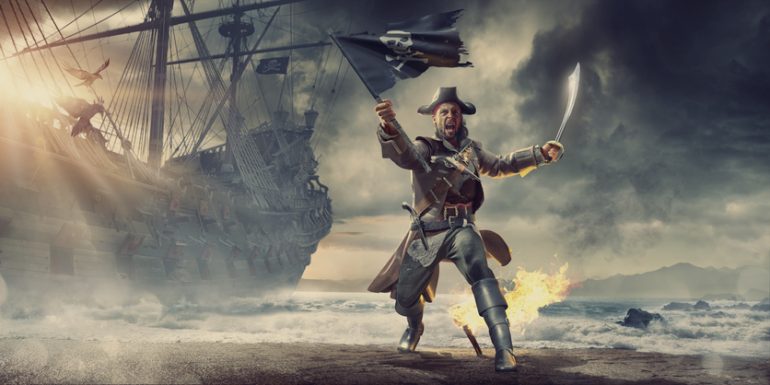
The iconic image of a pirate (Credit: peepo via Getty Images)
Arrr, ye be thinkin’ all pirates spoke the same, but that be more yarn than truth. In fact, most of what we picture as “pirate talk” comes less from history and more from the silver screen. The rolling “Arrr!” and hearty “matey” weren’t common phrases among sailors of the past. Instead, they gained popularity thanks to Robert Newton, a Cornish actor who played Long John Silver in the 1950 film Treasure Island. His strong West Country accent shaped how audiences believed pirates must have sounded. In truth, pirates came from all corners of the world – Britain, France, Spain, the Caribbean, Africa – so their voices were as varied as their origins. They certainly had colourful slang, often borrowed from the wider seafaring community, but it wouldn’t have been the same for everyone. While the Hollywood version of pirate speech is more myth than fact, it has become a cherished tradition.
Pet Parrots
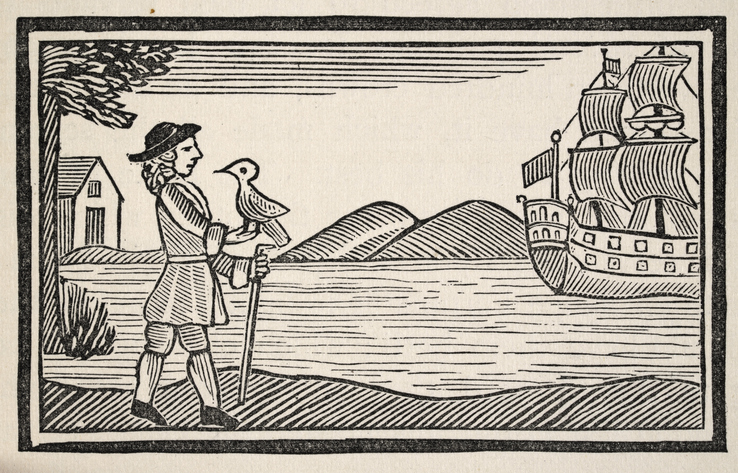
The pirate/parrot myth is centuries old (Credit: duncan1890 via Getty Images)
Some myths perch closer to truth than others. Sailors did sometimes keep exotic pets, and Caribbean parrots were especially prized for their bright plumage, chatter, and resale value in port markets. A pirate with a parrot on his shoulder wasn’t impossible – but it was hardly the standard accessory. Pets were more a matter of luck, trade, or whim than any established pirate tradition.
Peg Legs and Eye Patches

Wooden leg, eye patch and hook, the trifecta of pirate cliches! (Credit: CSA-Images via Getty Images)
Life at sea was rough, and injuries were common. Crude medical care meant that amputations weren’t unusual, so a wooden leg or a simple patch could appear among crews. Still, the image of the one-eyed, one-legged pirate became inflated through novels and films, rather than everyday reality.
One intriguing idea suggests an eye patch might have helped sailors maintain night vision below deck. Whether pirates actually used this trick is uncertain, but Hollywood certainly kept the myth afloat.
Rum, Revelry, and Rough Reality

Rum often masked the brutality of life at sea (Credit: Art-Of-Photo via Getty Images)
Rum is inseparable from pirate lore, and this one isn’t entirely exaggerated. Pirates consumed plenty of alcohol – rum, beer, brandy, and wine – often mixed with water to create “grog.” It served both to mask the taste of stagnant water and, let’s be honest, to keep spirits high.
But the constant boisterous image is misleading. Life at sea was brutal. Pirates endured cramped conditions, disease, storms, and the perpetual risk of capture or death. Yes, there was revelry in port towns, but the daily grind of piracy was more torment and toil than tavern brawl.
Women Pirates

Famous female pirates Mary Read & Anne Bonny (Credit: duncan1890 via Getty Images)
Contrary to common belief, women did sail and even lead as pirates. While many ships banned women on board, these rules were not universally enforced. In fact, female pirates often disguised themselves as men to gain entry into crews. Anne Bonny and Mary Read are two of the most famous examples – fighting alongside male counterparts and earning fierce reputations – while the legend of Awilda is a remarkable tale within Viking folklore and Zheng Yi Sao was perhaps the most successful pirate of them all.
Flying the Flag
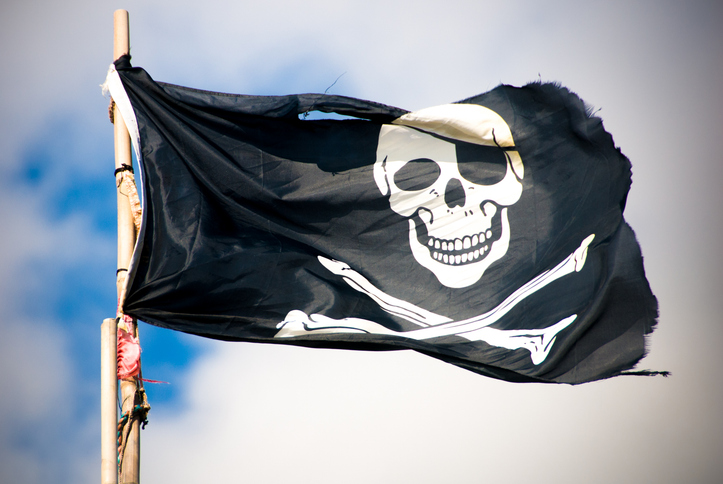
The Jolly Roger struck fear into all who encountered it (Credit: Bluer Photography via Getty Images)
The classic skull-and-crossbones known as the Jolly Roger is an image now inseparable from tales of swashbuckling rogues. And with good reason. Many pirate ships did fly flags depicting a skeleton or skull motif to strike fear into their targets. But it wasn’t universal. Nor was the image always the same. Many famous pirates had their own slightly different versions of the Jolly Roger. Blackbeard’s flag was said to have depicted a skeleton using a spear to stab a heart, while raising a glass with the other hand in a toast to the devil. Meanwhile, Edward Low’s Jolly Roger also featured a full skeleton, albeit drawn in red rather than white.
Planks and Punishments
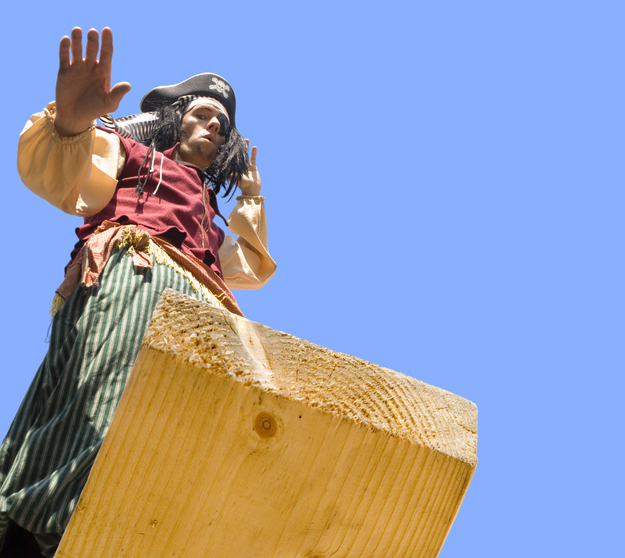
Walking the plank - a great story but a punishment rarely used (Credit: joshblake via Getty Images)
One of the most iconic images associated with piracy is that of a bound captive tiptoeing along a wooden board jutting out to sea, gulls wheeling overhead, sharks circling below. However, walking the plank is more talk than walk. In fact, there are only a handful of recorded incidents of pirates using the plank method, and most date from much later than the Golden Age of Piracy. The more common punishments were marooning on a deserted island with minimal supplies or simply tossing the unfortunate soul overboard. Grim, yes, but not nearly as cinematic.
Behind Blackbeard
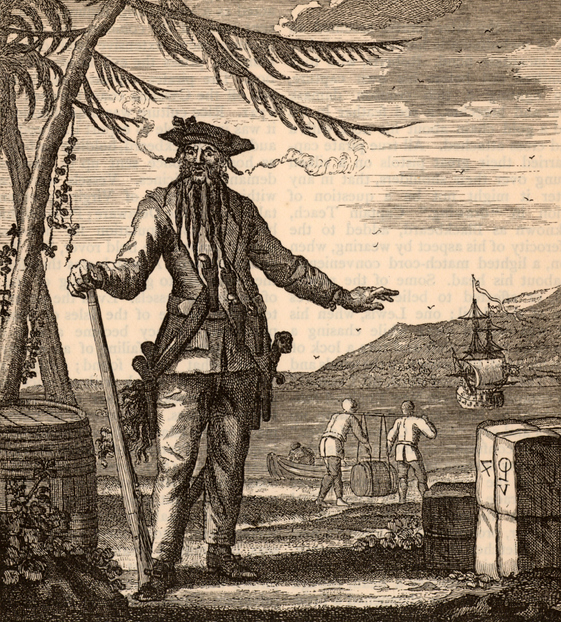
An illustration of Edward Teach, better known as Blackbeard (Credit: Photos.com via Getty Images)
Edward Teach, better known as Blackbeard, has become the very face of piracy. Stories paint him as a ruthless villain, his beard aflame, his enemies quaking at the sight of him. And yet, historians suggest he was far more strategist than sadist. For instance, Blackbeard famously tied slow-burning fuses under his hat and into his beard, creating a halo of smoke that gave him a demonic appearance in battle. It wasn’t about brutality, it was theatre. His goal was intimidation, not carnage. In fact, many records show he avoided unnecessary bloodshed; a frightened crew surrendered more quickly than a fighting one.
Democracy on Deck

The deck of a pirate ship (Credit: IanGoodPhotography via Getty Images)
One surprising truth: pirate crews were often more democratic than the societies they preyed upon. Captains were elected, not crowned, and could be voted out if they lost their crew’s confidence. Important decisions – where to sail, whether to fight, how to divide spoils – were often put to a vote.
The infamous “articles of agreement” spelled out rules for conduct, shares of treasure, and even compensation for injury. For example, losing an arm might guarantee a pension of several hundred pieces of eight. It wasn’t altruism, it was pragmatism. Keeping morale high and ensuring loyalty made a crew more effective. Ironically, at sea, pirates often lived with more equality than the average sailor in a navy or merchant vessel.
Pirates in Pop Culture: Why the Myths Persist

X marks the spot... (Credit: Roberto Scandola via Getty Images)
So why have myths of plank-walking, treasure maps, and parrot-perched shoulders stuck so firmly? Partly because they make good stories. Pirates became larger-than-life through theatre, novels, and eventually cinema. The truth – complex, messy, sometimes mundane – was smoothed into something audiences could cheer for (or boo).
Moreover, the pirate’s mix of freedom, rebellion, and danger is irresistible. After all, who doesn’t secretly wish for a buried chest waiting to be unearthed?
The Truth Is Saltier Than Fiction

A 19th century etching of pirates in New York (Credit: powerofforever via Getty Images)
When it comes to stereotypes, it seems pirate lore sails fairly close to the wind. Hollywood and pop culture are responsible for many a misconception. Thus, pirates were not the cartoonish rogues we’ve grown up with, but nor were they entirely the monsters feared by empires. They were somewhere in between: cunning entrepreneurs of crime, democratic in their own rough way, and masters of psychological warfare.