Could you imagine a world where you had to wait for your bank statements to come through the post once a month? Where paying a cheque into the bank meant you actually had to go into a bank? Where you paid for something by credit card and had to sign a piece of paper to confirm the transaction? It was a world defined by physical paperwork and face-to-face interactions, where managing money was tied to banks’ business hours and locations, with half a dozen banks on every high street. Communication was glacially slow, and financial transactions took days to process. This wasn’t so long ago…
Now, banking fits in your pocket. Phone wallets replace leather wallets, instant notifications keep you updated in real time, cryptocurrencies appear on side apps, and group chats handle split bills in seconds. The shift from physical to digital has transformed money into an instant part of everyday life.
With these changes emerging in little more than fifteen years, the big question is – what happens next to banks, cash, and the very idea of ‘money’? Let’s balance the books on where banking’s been, where it’s going, and what it means for everyday life.
The Disappearing Bank Branch: Banking Goes Fully Digital
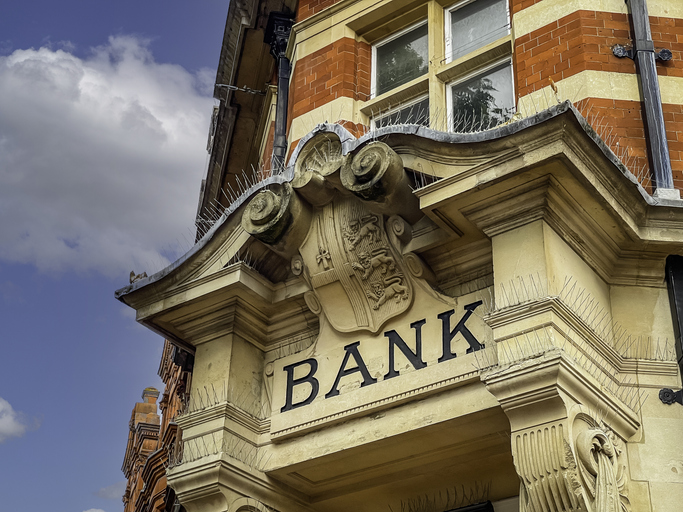
High street banks are slowly disappearing (Credit: Craig Hastings via Getty Images)
Bank branches are rapidly disappearing from high streets as digital banking becomes the norm. In the UK alone, around 35% of bank branches (around 3,500) have closed in the last five years, and it’s a trend that’s mirrored in Europe and the US as customers shift to digital money management. At the forefront of this shift are digital-first, app-only banks such as Monzo and Starling in the UK.
The future promises video calls with bankers replacing in-person appointments and integrated in-app services for things like mortgages, investing, and insurance. While this digital wave delivers unprecedented accessibility, it raises concerns about excluding older or less tech-savvy people who have always relied on face-to-face banking. The changing landscape means that your bank is now in the palm of your hand, but the human touch isn’t disappearing without controversy.
From Cash and Cards to Invisible Payments
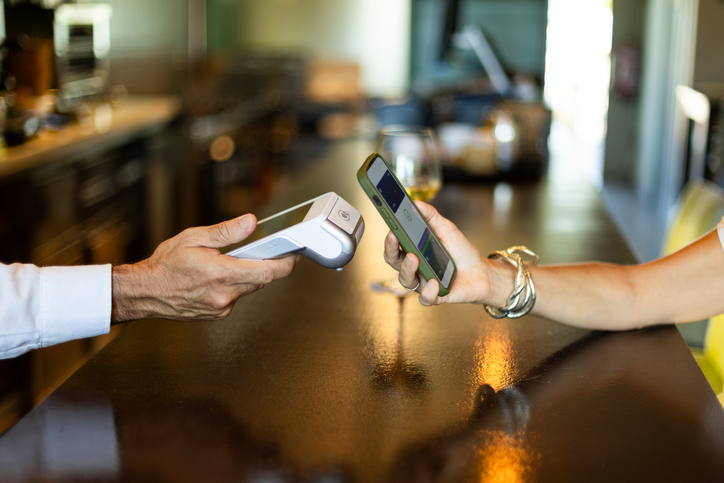
Contactless payment is used by hundreds of millions of people every day (Credit: Liquid Sky Studio via Getty Images)
Payments have evolved into something so seamless that we often forget we’re even spending money. Contactless cards, Apple Pay, and Google Pay letting you tap your phone or card on shop terminals has become the default for most everyday payments. Globally, 86% of consumers will use one or other of these tap-to-pay methods in 2025, with transactions 60% quicker than traditional chips, fuelling a market worth many tens of billions of pounds. Online, one-click options with card details saved in the browser, PayPal, or ‘buy with Apple Pay’ buttons are designed to skip the hassle of entering your details every time.
There’s also been the emergence of buy-now-pay-later services such as Klarna, Clearpay, and Afterpay, now ever-present in online shopping trollies and on their way to in-store checkouts. Looking ahead, biometric scans – your face or fingerprint – will be set to unlock payments without wallets, while apps for rides, subscriptions, or games handle charges invisibly in the background.
Open Banking & “Super Apps”: Your Money, Unbundled
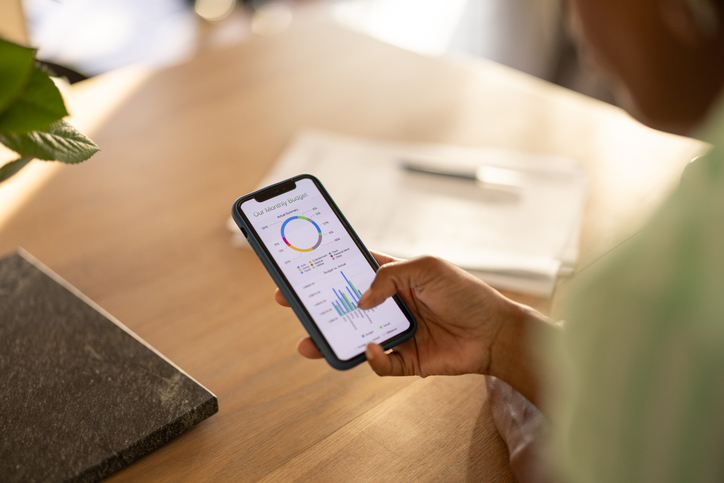
Apps let you organise your finances quickly and easily (Credit: Alistair Berg via Getty Images)
Banking is splintering apart and rebuilding inside everyday apps, thanks to open banking rules that increasingly let services pull data from multiple accounts into one clear view. Budgeting apps can automatically sort spending – food in one place, clothes in another, nights out somewhere else – and often nudge users toward saving goals, all without logging into separate bank sites.
Embedded finance takes it further, weaving banking into myriad platforms. Apple’s Wallet app offers credit for purchases, Uber drivers get instant payouts without leaving the ride app, Shopify and Stripe give online merchants business banking features like payments and on-the-spot loans. So-called ‘super apps’ such as Revolut expand this with currency swaps, investments, and even travel bookings. In China, apps like WeChat and Alipay take the idea even further, bundling messaging, QR-code payments, shopping, food delivery, ride-hailing, bill payments and even mini “apps within the app” into a single place.
AI Money Managers: Will Algorithms Run Our Finances?

Millions use AI to manage their money (Credit: Jonathan Kitchen via Getty Images)
AI is increasingly moving from a nice-to-have financial tool to a default feature for managing money. Many apps now automatically round up purchases and move spare change into savings accounts. Others predict upcoming bills and warn when someone may go into overdraft. Algorithms are increasingly designed to build investment portfolios tailored to risk preferences without needing a human adviser. AI also plays a vital role in credit decisions, fraud detection, and spotting unusual spending patterns to protect users.
Looking ahead, automated bill switching for utilities and insurance could become standard, saving time and money without the hassle of manual comparison. Personal money managers powered by AI might soon suggest the best times to refinance mortgages, where to put savings, or when to cut unused subscriptions. However, this automation raises questions about accountability when algorithms make mistakes and whether users fully understand decisions made on their behalf. Despite these concerns, it’s been estimated that more than 28 million UK adults already use AI tools to help manage their finances.
Crypto, Stablecoins & CBDCs: Will We Still Use ‘Normal’ Money?
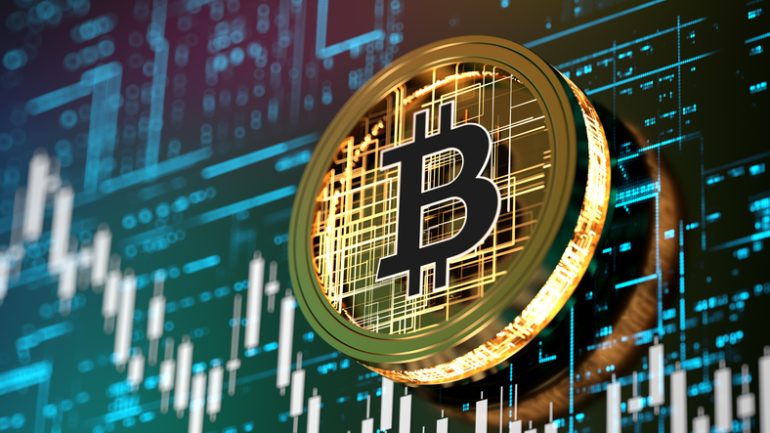
More people are using and accepting cryptocurrency like Bitcoin (Credit: Olemedia via Getty Images)
Digital money like cryptocurrency is stepping out of the spotlight of risky bets into everyday practical roles, such as sending money across borders or paying for online purchases. Stablecoins are special digital versions of regular money – like dollars or euros – that are designed to stay steady in value.
Countries are exploring official digital cash too, called Central Bank Digital Currencies (CBDCs). China is already running large-scale public pilots of a digital yuan, the euro area is preparing for a potential digital euro, and the UK is consulting on a possible ‘digital pound’. These won’t wipe out paper notes but will mix in with bank accounts and cards for things like government benefits.
Green & Ethical Finance: Can Money Help Fix the Planet?

People are conscious of where their money is being invested (Credit: Worawith Ounpeng via Getty Images)
Banks and apps are attempting to weave sustainability into everyday money tools, designed to reduce environmental impact. Carbon-tracking features in banking apps show the estimated carbon footprint of spending, showing, for instance, that flights produce far more carbon than trains. These tools often break down by category, offering tips to cut back and track changes over time.
Green savings accounts and investments, such as green bonds or funds focused on the environment and ethical business practice, aim to support clean energy or eco-projects directly through banking apps. Looking ahead, new rules will aim to ensure banks reveal climate risks in their loans, while everyday options like cheaper mortgages for energy-saving homes could become standard.
Security & Privacy

Biometrics help keep your accounts secure (Credit: Witthaya Prasongsin via Getty Images)
Digital banking is designed to be safer than ever, with new tools put in place to help protect money and data. Banks use multi-factor authentication and biometrics – including face or fingerprint unlocks – to help keep accounts secure. Instant fraud alerts often notify users of suspicious activity, and people can freeze cards instantly via banking apps. Behind the scenes, AI and behavioural analytics are increasingly used to monitor unusual patterns to help flag fraud early.
But with new technology come new risks. Scammers increasingly use phishing emails, SMS scams, and deepfake voice calls pretending to be family or bank staff to trick customers. Data breaches at big platforms have been reported, often exposing personal information. Future security upgrades may include password-free logins, but it’s an ongoing battle between security tech and scammers.
The Future: Money in 10 Years’ Time

The future of finance is a one-way ticket... (Credit: Andriy Onufriyenko via Getty Images)
In a decade from now, banking could fade even further into the background, with ultra-personalised financial “co-pilots” quietly embedded in everyday apps that anticipate needs, move money, and negotiate better deals in real time. AI systems may not only automate budgeting and saving, but also simulate different life paths on the fly, stress-testing plans against shifting markets, new regulations, and personal goals. Underpinning this, quantum-safe encryption and quantum key distribution could protect transactions against next‑generation cyber threats. However these technologies progress, one thing seems certain, the future of money is likely to move faster and wider than ever before.