History is often remembered for its grand dramas – empires rising, revolutions erupting, and leaders shaping the fate of nations. Yet scattered between those weighty events are moments so peculiar they feel almost invented. A bucket that sparked a war. An emperor forced into retreat by a wave of rabbits. A presidential funeral disrupted by a foul-mouthed bird. If these stories appeared on April Fools’ Day, most people would assume they were clever pranks. The surprising part is they seemingly happened.
The past is full of these odd twists, unlikely mishaps, and decisions so baffling they almost defy belief. Here are ten historical episodes that sound completely ridiculous, and yet are entirely real.
The War that Started Over a Bucket

The cobblestones and porticos of Bologna's Old Town (Credit: sedmak via Getty Images)
In 1325, two Italian city-states went to war over something that sounds like a joke: a wooden bucket. According to the somewhat-questionable legend, soldiers from Modena slipped into rival Bologna and stole a bucket from a city well. Bologna demanded its return, but Modena refused, and wounded pride quickly turned the dispute into open war. Soon thousands of soldiers marched out to fight. The conflict, known as the War of the Oaken Bucket, ended with Modena’s victory at the Battle of Zappolino. The strangest part? Modena kept the bucket as a trophy. A bucket believed to be the original is still displayed there today.
Napoleon’s Hare-y Retreat
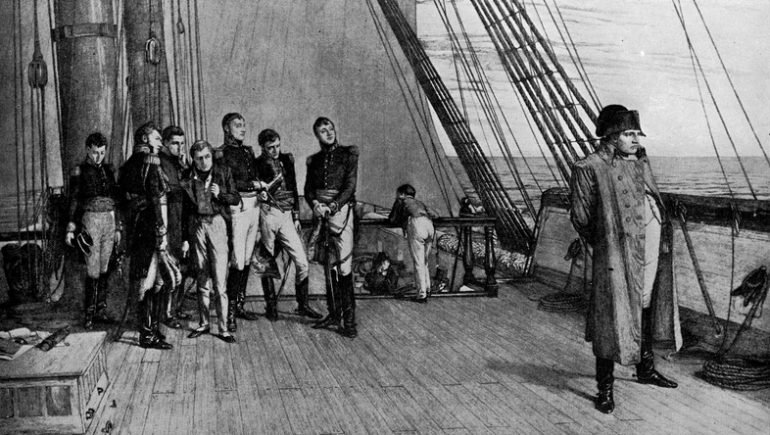
Napoleon Bonaparte, possibly thinking about rabbits (Credit: powerofforever via Getty Images)
In 1807, Napoleon Bonaparte planned a grand rabbit hunt to entertain guests near Paris. Hundreds of rabbits were released for the occasion. The idea sounded simple enough. However, the rabbits had other plans. Instead of running away, the animals rushed straight at the emperor and his hunting party. Historians believe the rabbits were tame and used to being fed by people. They saw Napoleon not as a hunter, but as dinner delivery. Soon the field was full of charging bunnies. Napoleon reportedly retreated to his carriage while the rabbit army pressed on. It was less a hunt and more a fluffy uprising.
Australia Versus Emus
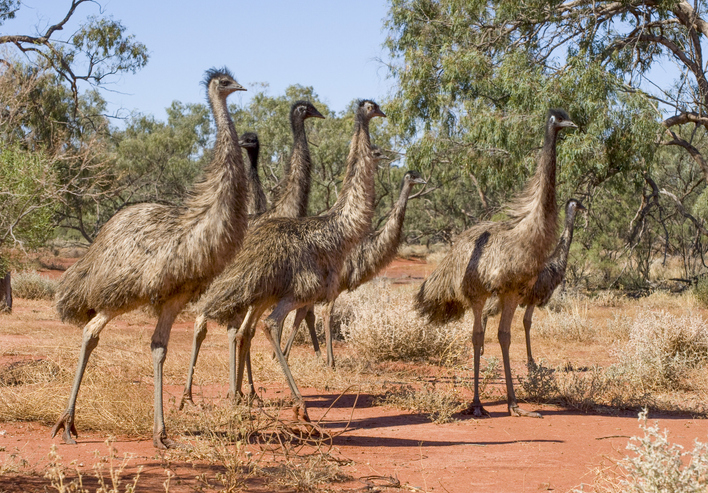
Emus, ready and waiting... (Credit: JohnCarnemolla via Getty Images)
In 1932, Australia found itself in an unlikely conflict: a war against emus. It all started after World War I, when veterans were granted farmland in Western Australia, but their crops soon attracted enormous migrating flocks of the large flightless birds.
The government responded by sending soldiers armed with machine guns. Yet the emus proved fast, unpredictable, and surprisingly difficult to stop. The birds scattered when attacked and regrouped elsewhere, turning the operation into a frustrating game of feathered cat-and-mouse. After several weeks, the military withdrew, leaving the emus the unlikely winners of what history remembers as the Great Emu War.
The Man Who “Sold” the Eiffel Tower
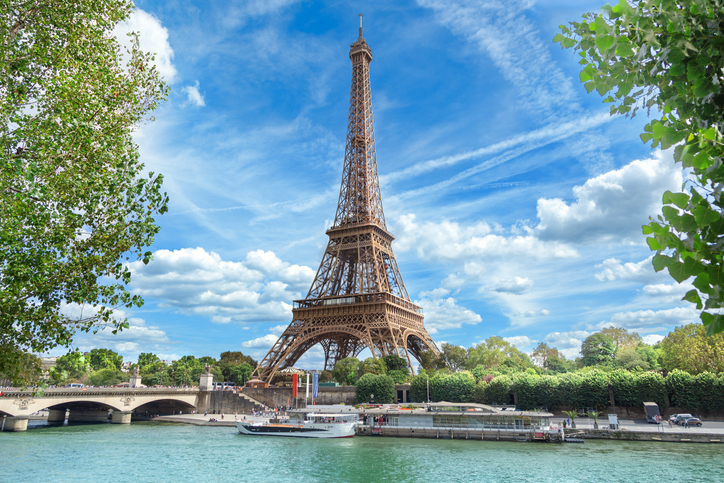
C'est combien...? (Credit: adisa via Getty Images)
In the 1920s, con artist Victor Lustig pulled off one of the most audacious scams in history: convincing scrap metal dealers that the Eiffel Tower was about to be dismantled. Posing as a government official, he invited dealers to a confidential meeting and claimed the structure had become too expensive to maintain. One dealer believed the story and paid a substantial bribe to secure the contract to buy the tower for scrap.
By the time the truth emerged, Lustig had already vanished. Remarkably, he later returned to Paris and attempted the same scam again, though this time his mark grew suspicious and reported the scheme to police, forcing Lustig to flee the country.
The Officer Who Brought a Sword to World War II

Mad Jack went to war with his bagpipes... (Credit: Bob Krist via Getty Images)
They say not to bring a knife to a gunfight. Well, Lieutenant Colonel Jack Churchill must have taken the idiom as a challenge, because he went a step or two further. While fighting in World War II, the British officer insisted on entering battle armed with a longbow, a Scottish broadsword, and his bagpipes. Such escapades earned him the nickname Mad Jack. His heroism earned him numerous awards, including the Military Cross and two Distinguished Service Order decorations.
The Pig that Almost Started a War

The stunning coastline of San Juan Island (Credit: Lidija Kamansky via Getty Images)
In 1859, a wandering pig sparked an international crisis. The trouble began on San Juan Island, a patch of land claimed by both the United States and Britain. An American farmer shot a British-owned pig after it rooted through his potato patch. Tempers flared fast. Soldiers arrived. Warships followed. At one point, hundreds of troops faced off over the pig’s fate. Yet no one fired a shot. Instead, cooler heads stepped in and both sides agreed to share the island while diplomats sorted it out.
The Night Thousands of Sheep Panicked
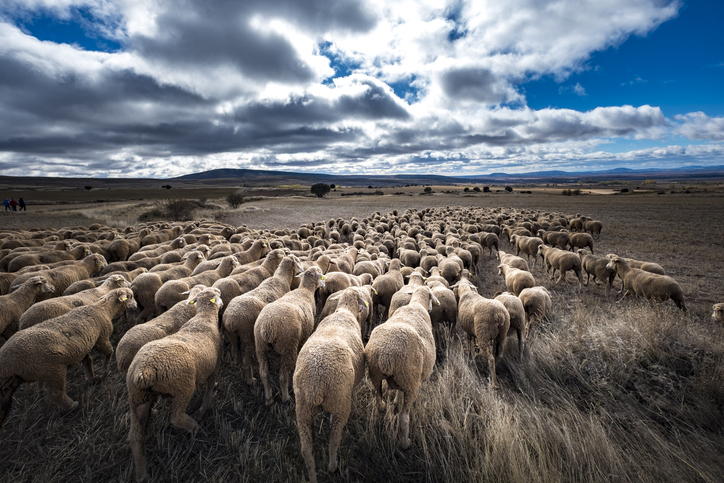
On your marks, get set.... (Credit: Carlos Sanchez Pereyra via Getty Images)
In November 1888, a strange disturbance swept across southern England. During the night, thousands of sheep suddenly bolted through fields, smashing into fences and hedges as if fleeing an unseen threat. By morning, farmers across several counties found scattered flocks, damaged farmland, and injured animals. The strange episode became known as the Great Sheep Panic of 1888.
Various explanations were proposed, from storms to predators to unusual atmospheric conditions. The most likely cause is a chain reaction among the highly sensitive herd animals, but historians are still a little “bah-ffled” about exactly what set the panic in motion.
The President’s Potty-Mouthed Parrot
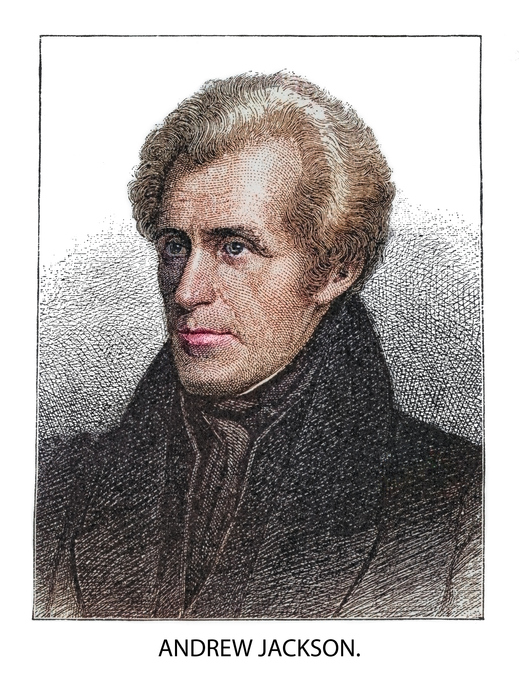
President Andrew Jackson (Credit: mikroman6via Getty Images)
When former U.S. president Andrew Jackson was buried in 1845, the ceremony was expected to be solemn and dignified. Instead, it was briefly interrupted by an unexpected voice. Jackson’s pet African grey parrot, reportedly named Poll, had spent years listening to the famously hot-tempered president. During the funeral, the bird began loudly shouting profanities.
According to witnesses, the disruption became so severe that the parrot had to be removed so the service could continue. Even in death, it seems Jackson’s colourful language had one final echo.
The Weekend at Bernie’s Spy Plan
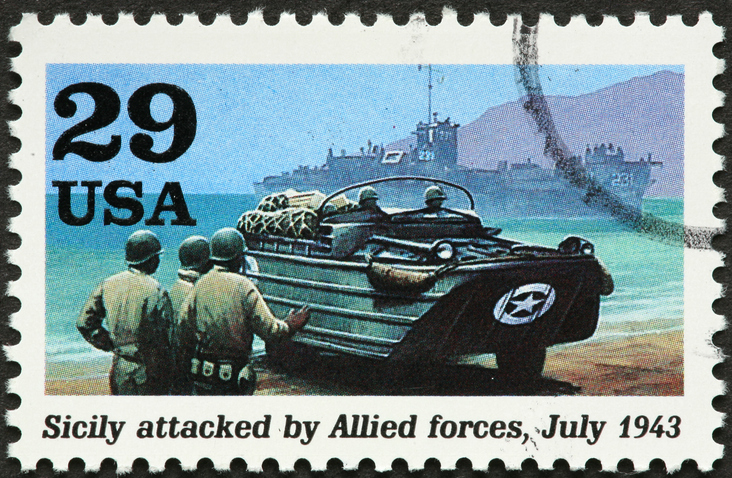
Allied invasion of Sicily, July 1943 (Credit: raclro via Getty Images)
During World War II, British intelligence launched one of the most unusual deception plans ever attempted. Known as Operation Mincemeat, the scheme involved planting fake invasion plans on the body of a deceased man disguised as a Royal Marines officer. The body was released off the coast of Spain, where officials with links to German intelligence would discover it. The ruse fooled Nazi intelligence. Germany diverted troops to the wrong locations, helping the Allied invasion of Sicily in 1943 succeed with less resistance.
The Feline Shields
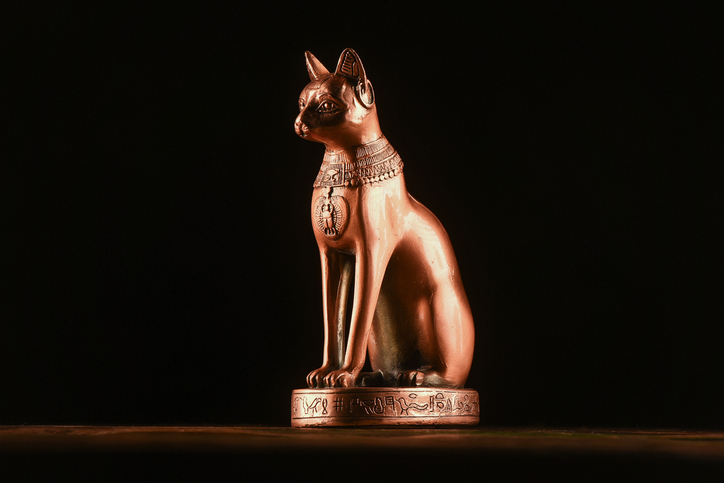
A statue of the cat goddess Bastet (Credit: undefined undefined via Getty Images)
In 525 BC, the Persian king Cambyses II faced Egypt at the Battle of Pelusium. According to ancient sources, the Persians used an unusual tactic: cats. Egyptians held cats as sacred animals linked to the goddess Bastet, so harming one was unthinkable. Persian soldiers reportedly carried cats, or even painted them on shields, as they advanced. Egyptian troops hesitated to fire arrows for fear of hurting the animals. That pause may have tipped the fight in Persia’s favour. It sounds like a tall tale, yet historians still debate it today. Either way, Pelusium might be history’s strangest example of winning a battle by a whisker.
Stranger Than Fiction

Emperor Napoleon, wait for me.... (Credit: Carlos Carreno via Getty Images)
History, it turns out, has a peculiar sense of humour. For every grand battle or sweeping revolution, there’s a stolen bucket sparking a war, an emperor chased by rabbits, or a parrot loudly heckling a presidential funeral. These odd moments show the past wasn’t just shaped by rulers and conflicts, but also by chance, misunderstanding, and the occasional absurd twist of fate.
And that’s precisely what makes it so fascinating. The next time a historical anecdote sounds a little too strange to be true, don’t dismiss it too quickly, because, as these stories show, reality has always had a flair for the ridiculous.