Mathematics is often described as the language of the universe, underpinning everything from planetary motion to smartphone screens. Yet beyond school textbooks and chalkboard equations lies a realm of weird ideas so strange and counter-intuitive that they challenge how reality itself is understood. Far from being abstract curiosities, many of these concepts have been rigorously proven through mathematics and repeatedly confirmed through observation and application.
From infinities that come in different sizes, to shapes that can never be constructed, mathematics reveals a universe far more mysterious than it first appears. Here are ten genuinely mind-blowing concepts, all proven by maths, that show just how deep the rabbit hole goes.
1. Infinity Comes in Different Sizes
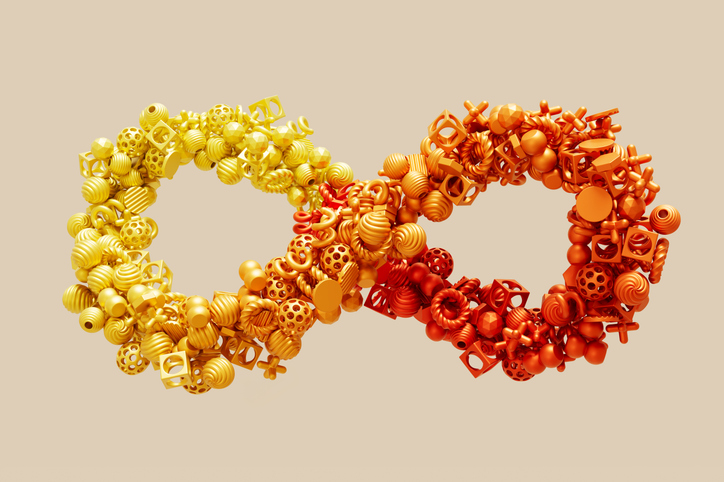
Infinity comes in different sizes (Credit: Eugene Mymrin via Getty Images)
Infinity is commonly imagined as a single, boundless concept. Yet mathematician Georg Cantor proved in the late 19th century that some infinities are bigger than others.
The set of natural numbers (1, 2, 3…) is infinite. So is the set of real numbers (which includes decimals like π). However, Cantor demonstrated that the real numbers form a larger infinity than the natural numbers. His famous “diagonal argument” showed that no matter how many real numbers are listed, there will always be more that cannot be accounted for.
This result shattered centuries of intuition. Infinity, it turns out, is not a single idea but a hierarchy of endlessly expanding magnitudes.
2. Most Numbers are Unnameable

We can write down some numbers, but not all... (Credit: hadynyah via Getty Images)
Despite humanity’s long history with numbers, almost all numbers can never be written down, named, or even meaningfully described.
There are infinitely many real numbers, but only a finite number of words, symbols, and definitions. That means the vast majority of numbers can’t be expressed using any formula, pattern, or description. Famous constants like π and √2 are rare exceptions.
Mathematically speaking, nearly every number that exists is inaccessible to human language. The number line, dense and continuous, is largely made up of entities that will never be named.
A Shape can have Infinite Perimeter but Finite Area
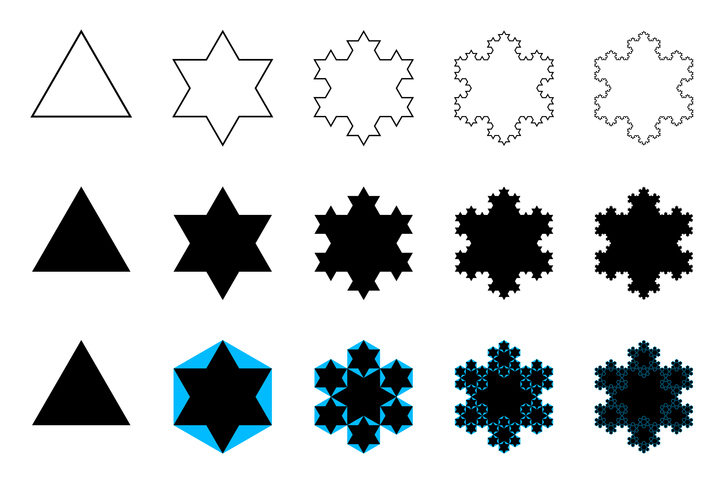
The evolution of a Koch snowflake (Credit: PeterHermesFurian via Getty Images)
At first glance, this seems impossible. If a shape’s boundary is infinite, how could its interior be limited?
Enter the Koch snowflake, a fractal constructed by repeatedly adding triangular “bumps” to each side of an initial triangle. With each iteration, the perimeter grows longer and longer, increasing without limit. Yet the total area converges to a fixed value.
This paradoxical result revealed that intuition drawn from simple geometry breaks down when infinite processes are involved. It also helped lay the foundations for fractal geometry, now used to model coastlines, clouds, and natural growth patterns.
4. Randomness Can Create Order
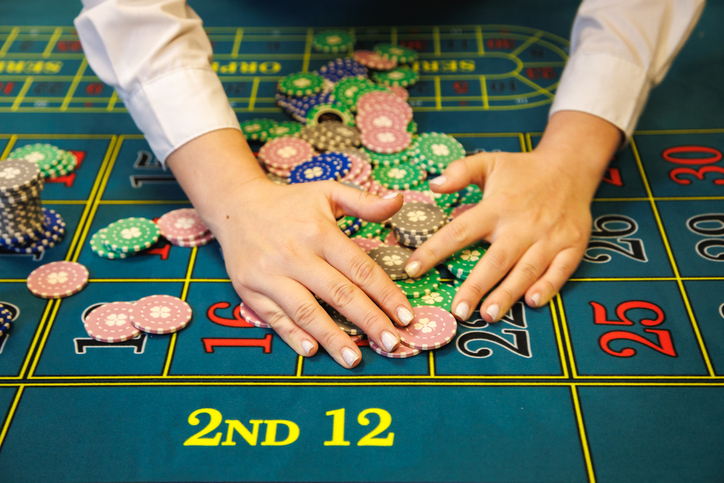
The house always wins (Credit: Evgenii Mikhailov via Getty Images)
Randomness is often associated with chaos, yet mathematics shows that randomness can produce remarkable structure.
The law of large numbers proves that when random events are repeated often enough, predictable patterns emerge. This is why casinos always profit in the long run, why insurance companies can model risk, and why polling works despite individual unpredictability.
5. There are More Ways to Shuffle a Deck of Cards than Atoms on Earth

There are lots of ways to shuffle a deck! (Credit: ivanmateev via Getty Images)
A standard deck of 52 playing cards can be arranged in 52 factorial (52!) different ways. That number is approximately:
80,658,175,170,943,878,571,660,636,856,403,766,975,289,505,440,000,000,000
To put this in perspective, there are estimated to be around 10⁵⁰ atoms on Earth. That means almost every time a deck of cards is shuffled properly, the resulting order has likely never existed before and will never exist again.
This staggering figure highlights how quickly numbers grow in combinatorics, a branch of mathematics essential to cryptography, computing, and probability theory.
6. Some Truths Are Unprovable
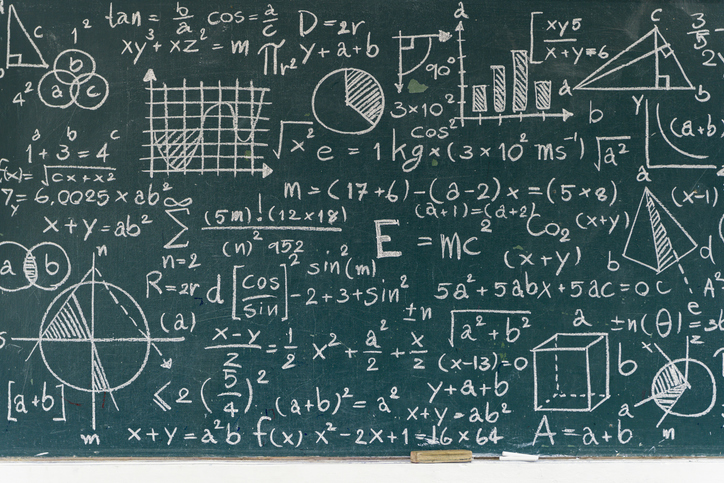
Mathematics has inherent limits (Credit: Thanaphum Tachakanjanapong via Getty Images)
One of the most unsettling results in mathematics is Kurt Gödel’s Incompleteness Theorems, published in 1931.
Gödel proved that in any mathematical system complex enough to describe arithmetic, there will always be true statements that cannot be proven within that system. In other words, no single logical framework can ever be both complete and consistent.
This result had profound philosophical implications. It showed that mathematics, despite its precision, has inherent limits. Even in the most rigorous logical universe imaginable, some truths will forever lie beyond proof.
7. Zero is More Powerful than it Looks

Zero is amazing (Credit: andresr via Getty Images)
Zero feels obvious today, but mathematically it’s one of humanity’s most revolutionary ideas.
It acts as a placeholder, enabling the decimal system, algebra, calculus, and modern computing. Without zero, equations collapse, coordinate systems fail, and digital technology becomes impossible.
Mathematically, zero also behaves in uniquely powerful ways. It’s the identity of addition, the boundary between positive and negative numbers, and the point around which entire theories of limits and continuity are built. A symbol that represents “nothing” turns out to be essential to almost everything.
8. Some Shapes Can Never Be Constructed
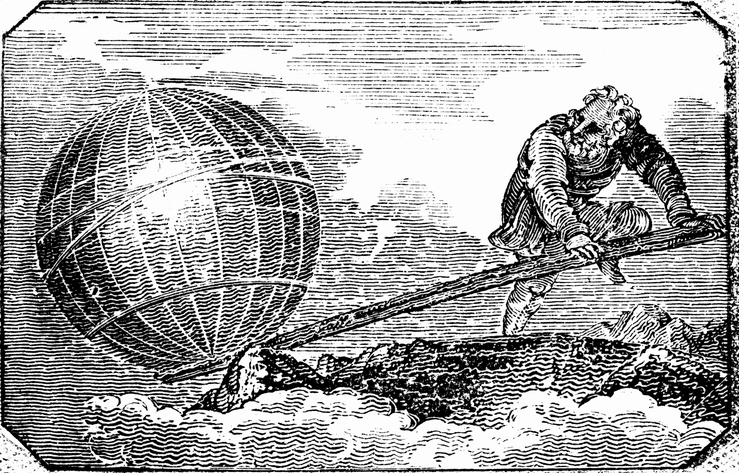
Archimedes, perhaps the greatest of all ancient Greek mathematicians (Credit: Photos.com via Getty Images)
The ancient Greeks attempted to solve three famous geometric problems using only a compass and straightedge: squaring the circle, doubling the cube, and trisecting an angle. Centuries later, mathematics proved that all three tasks are impossible.
Using algebra and number theory, mathematicians showed that these constructions require solving equations which cannot be resolved with the allowed tools. The proof did not depend on physical limitations but on deep properties of numbers themselves.
This revelation demonstrated that mathematical impossibility is absolute, not a matter of skill or ingenuity.
9. Dimensions Don’t Stop at Three
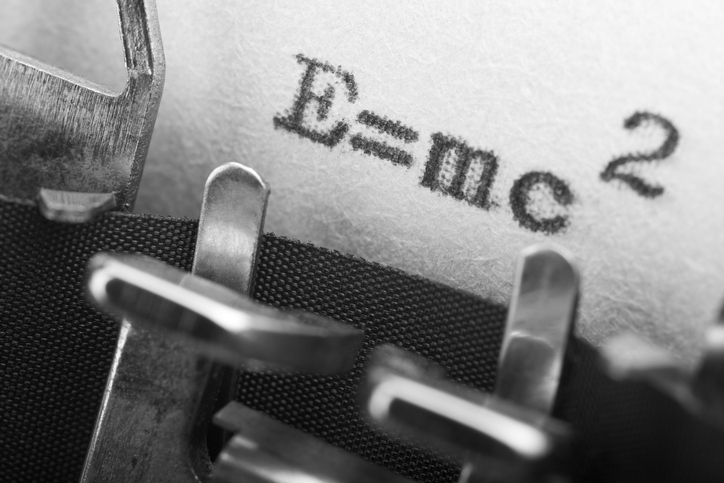
Einstein's iconic equation (Credit: JLGutierrez via Getty Images)
Humans experience three dimensions of space, yet mathematics has no such restriction.
Mathematicians routinely work with four, ten, or even infinitely many dimensions. These higher-dimensional spaces are not science fiction abstractions but rigorously defined mathematical objects used in physics, data science, and machine learning.
For example, Einstein’s theory of relativity relies on four-dimensional spacetime, while modern algorithms use high-dimensional geometry to recognise faces, translate languages, and predict behaviour. Maths proves that reality can be modelled far beyond human perception.
10. Maths Predicted Reality Before it was Observed
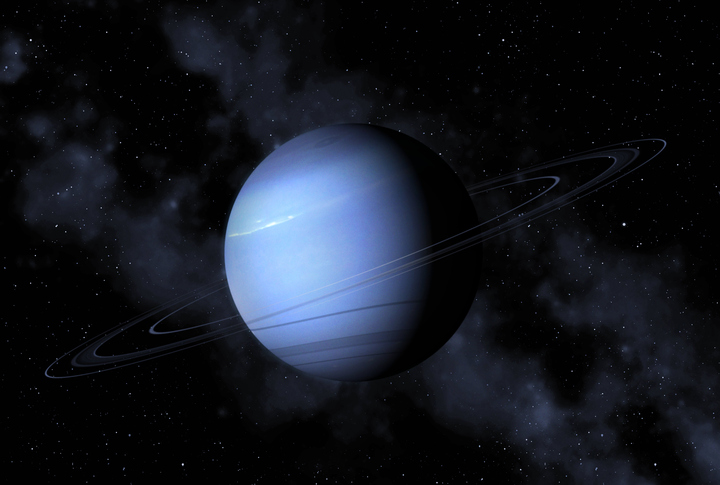
Maths predicted the existence of Neptune (Credit: Science Photo Library - MARK GARLICK. via Getty Images)
One of the most astonishing powers of mathematics is its ability to predict phenomena before they are discovered.
Equations predicted the existence of Neptune before telescopes found it. Dirac’s equations predicted antimatter years before it was observed. Einstein’s maths foresaw gravitational waves a century before instruments detected them.
In these cases, mathematics did not merely describe reality, it anticipated it. Patterns written on paper revealed truths about the universe long before experiments could confirm them.
The Hidden Depths of Numbers
Sometimes, what we think is right, might not be... (Credit: agrobacter via Getty Images)
Mathematics is often taught as a practical tool, useful for counting, measuring, and calculating. Yet beneath those everyday functions lies a world of ideas that stretch imagination to its limits. It reveals infinities within infinities, order within randomness, and truths beyond proof. In these mind-bending concepts, maths does more than solve problems, it reshapes how the universe itself is understood, one elegant equation at a time.