More than a century after the guns fell silent, the echoes of the Great War still linger across Britain, Europe and beyond. The chalk downs of Salisbury Plain, the poppy-covered slopes of the Somme, and the quiet village greens all bear traces of a conflict that reshaped a generation.
Today, memorials, cemeteries, and preserved battlefields stand as guardians of those memories, places where the stories of ordinary men and women are etched into stone and landscape alike. In this feature, we explore ten remarkable sites that trace Britain’s World War I journey and offer poignant stories of mobilisation, battle, endurance, and commemoration.
Salisbury Plain, Wiltshire | Britain’s Great War Training Ground
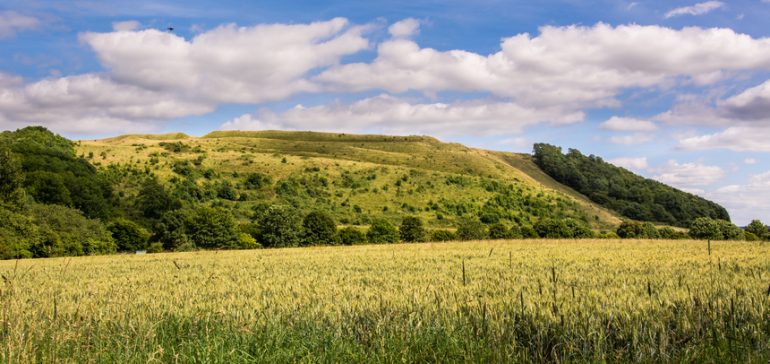
Salisbury Plain, Wiltshire (Credit: Ian_Redding via Getty Images)
Thousands of soldiers prepared for the harsh realities of World War I on Salisbury Plain, a vast stretch of chalk downland that became one of Britain’s most important training grounds. Here, recruits learned the brutal lessons of modern warfare long before they faced the real thing. The preserved trench network at Larkhill, carved into the chalk, was meticulously designed to mirror the conditions of the Western Front, complete with communication trenches, firing bays, and dugouts. Beneath the surface, a warren of tunnels and shelters gave troops a glimpse of the claustrophobic world they would soon inhabit in France and Belgium. Today, visitors can still walk these reconstructed lines, offering a rare, tangible connection to the men who once trained here before heading to the front.
Paddington Station, London | The Platform of Departure
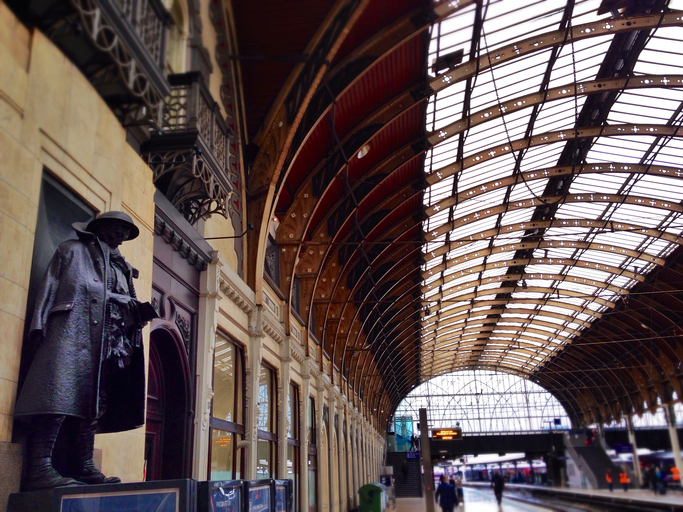
The War Memorial at Paddington Station, London (Credit: Simon Montgomery via Getty Images)
Paddington Station in London was a pivotal gateway for tens of thousands of British troops beginning their journey to the Western Front. More than just a transit hub, it was a place where families waved off departing soldiers, and for many, it was their final goodbye. Today, the station houses the Great Western Railway War Memorial on Platform 1 – commonly referred to as A Soldier Reading a Letter, depicting a young soldier reading correspondence from home.
The Somme Battlefield, France | The Centre of Sacrifice
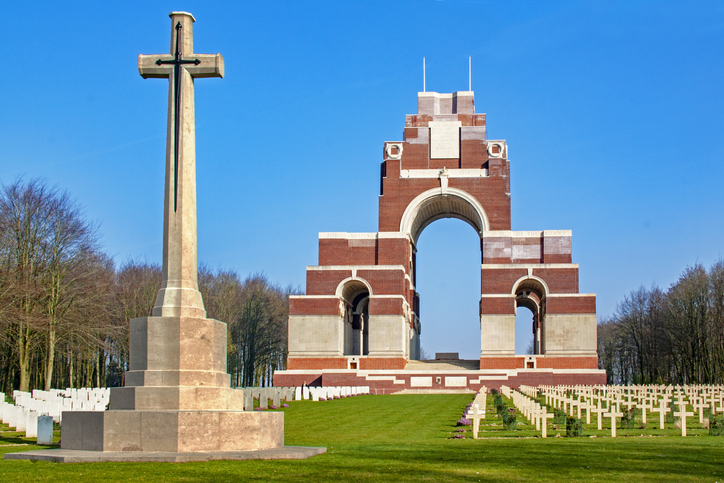
The Thiepval Memorial to the Missing of the Somme (Credit: guy-ozenne via Getty Images)
The green fields of the Somme conceal the scars of one of the bloodiest battles in history. During the Battle of the Somme, which lasted from July to November 1916, British and Allied forces suffered at least 400,000 casualties as they attempted to break through entrenched German lines. The first day alone remains the deadliest in British military history, with nearly 60,000 casualties including over 19,000 killed. The Thiepval Memorial to the Missing of the Somme now stands prominently on the battlefield, engraved with the names of more than 72,000 British and South African soldiers who have no known grave.
Arras Tunnels, France | The Hidden City
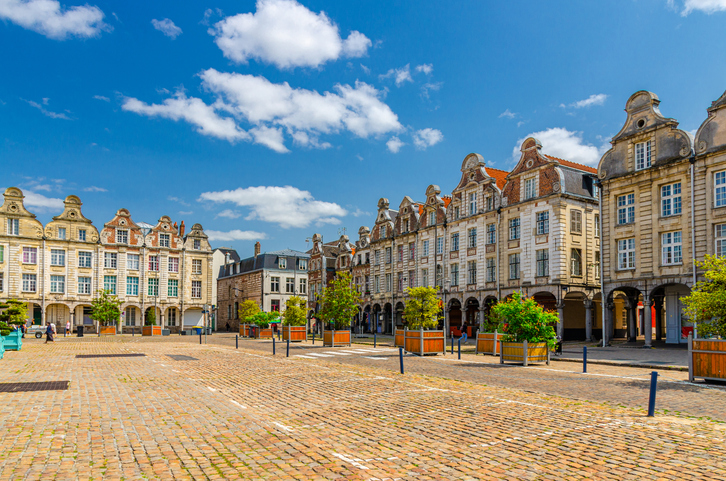
The town square in Arras (Credit: Aliaksandr Antanovich via Getty Images)
Beneath the city of Arras, around 54 miles south of Dunkirk in northeastern France, lies a vast labyrinth of tunnels expanded by British and New Zealand engineers in late 1916. This underground network, known as the Arras Tunnels or Wellington Quarry, safely sheltered approximately 24,000 soldiers in preparation for the Battle of Arras which took place between April and May 1917. Equipped with electric lights, water, kitchens, and medical facilities, the tunnels were a remarkable feat of military engineering, and soldiers even carved names, poems and sketches on the walls. At dawn on 9 April, troops emerged from this hidden world to surprise German lines, marking one of the key Allied victories of 1917.
Etaples Military Cemetery, France | The Healing Front
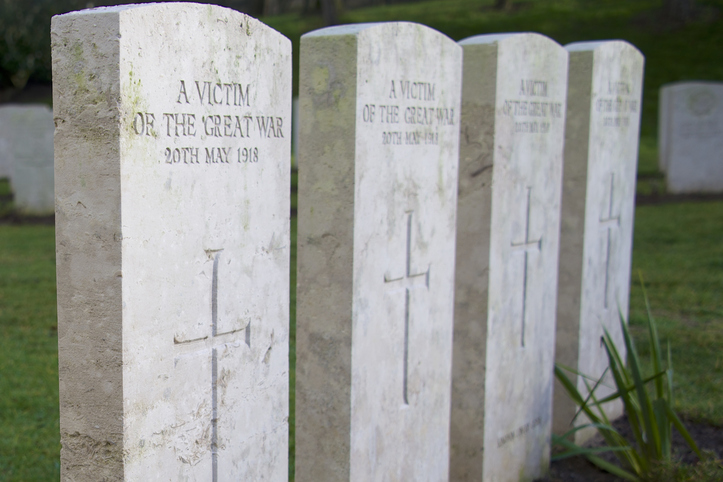
Etaples Military Cemetery (Credit: Malcolm P Chapman via Getty Images)
Etaples Military Cemetery, located near Boulogne on the northern French coast, was the largest British military hospital complex during World War I. At its peak, Etaples housed over 100,000 troops in training camps and hospitals, treating thousands of wounded soldiers from the Western Front. The cemetery now holds over 10,700 WWI graves, including those of nurses, medical staff, and labourers who cared for the injured. Designed by Sir Edwin Lutyens, it quietly commemorates the vital, often overlooked contributions of these caregivers and the sacrifice made far from the battlefield. Notable burials include Sister Katherine MacDonald, the first Canadian nurse killed by enemy activity, as well as Wales and British and Irish Lions rugby union international Captain Noel Forbes Humphreys, and Manchester United centre forward Pte. Hugh Kerr.
Ypres & The Menin Gate, Belgium | The Ritual of Memory
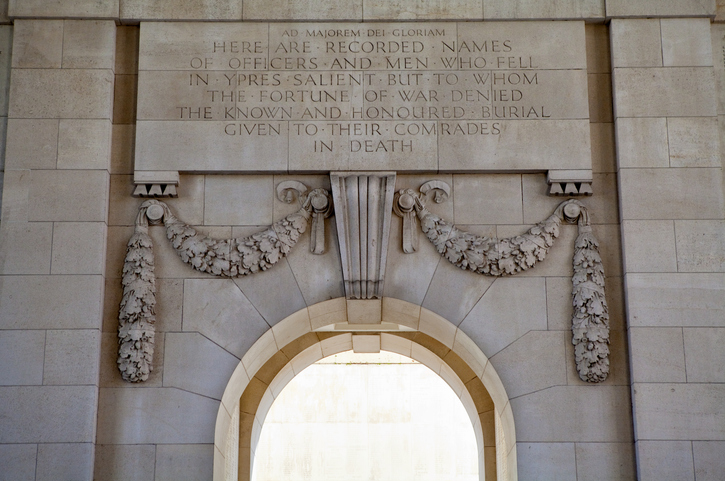
The dedication on the Menin Gate (Credit: chrisdorney via Getty Images)
The battles fought around Ypres during World War I were among the most intense and costly of the conflict. Across several engagements – the First Battle of Ypres in 1914, the Second Battle in 1915, and the devastating Third Battle, also known as Passchendaele, in 1917 – British, Commonwealth, and Allied forces suffered staggering losses. Despite the huge numbers of dead and injured, the Allies held the crucial Ypres Salient, a key defensive position in Belgium. Today, every evening at 8pm the streets of Ypres come to a solemn halt as buglers sound the Last Post beneath the towering Menin Gate Memorial – built to honour more than 54,000 British and Commonwealth soldiers who died in the Ypres Salient. This ritual, uninterrupted since 1928 except during World War II, is an ongoing reminder of one of the war’s fiercest battles.
Tyne Cot Cemetery, Passchendaele, Belgium | The Scale of Sacrifice
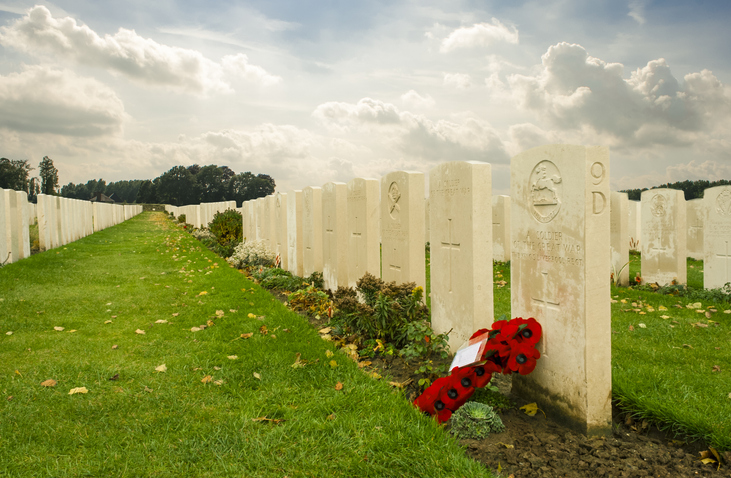
Tyne Cot Cemetery (Credit: Havana1234 via Getty Images)
Tyne Cot Cemetery, overlooking the fields of Flanders near Passchendaele in the northwest corner of Belgium, is the largest Commonwealth war cemetery in the world. Just 20 miles from the French border, the cemetery contains nearly 12,000 graves, the majority of which belong to soldiers who remain unidentified, marked with the inscription “Known unto God.” It started as a small aid station but grew and grew as thousands of bodies were exhumed from the nearby battlefields. Alongside the graves is the Memorial to the Missing, inscribed with the names of almost 35,000 soldiers who have no known resting place. Tyne Cot stands as a stark reminder of the staggering cost of the Battle of Passchendaele, in which more than half a million men were killed or wounded in around 100 days, for a territorial gain of little more than five miles.
Thessaloniki, Greece | The Forgotten Front
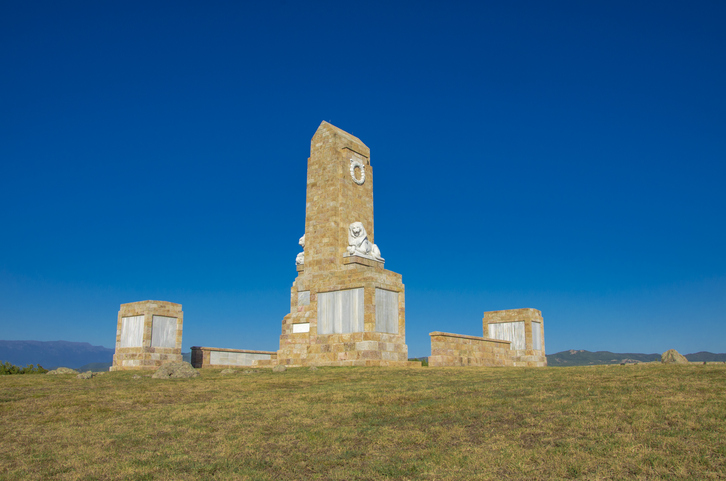
The Doiran Memorial (Credit: Jovep305 via Getty Images)
On the hills above Lake Doiran in northern Greece, the Doiran Memorial pays tribute to the British Salonika Force (BSF) which fought in a lesser-known but arduous campaign far from the Western Front’s spotlight. Between 1915 and 1918, the BSF endured harsh conditions, disease, and isolation while engaging Bulgarian forces in treacherous mountain terrain. The memorial reads, ‘In glorious memory of 418 officers and 10,282 other ranks of the British Salonika Force who died in Macedonia and Serbia 1915–1918 and to commemorate 1,979 of all ranks who have no known grave but whose names are on the panels. They did their duty.’ The nearby Doiran Military Cemetery holds over 1,300 Commonwealth burials and remembers the resilience of the forgotten army.
Gallipoli Peninsula, Turkey | The Allied Tragedy
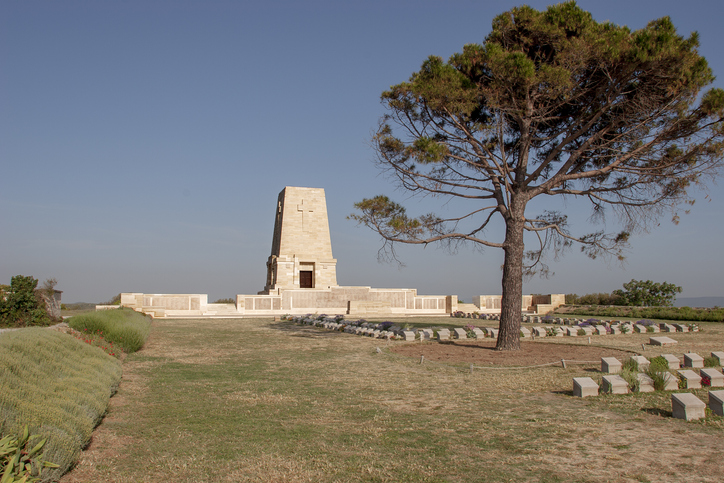
The memorial to the fallen Allied soldiers at the Gallipoli battlefield (Credit: FSYLN via Getty Images)
Though most famously associated with the ANZACs, Gallipoli was very much a British story as well, involving troops from England, Ireland, India, and beyond. The now-quiet beaches and cliffs of Helles and Suvla Bay belie the courage and chaos of the Gallipoli Campaign, which was devastating and ultimately futile. Between the Allies and Ottoman troops, there were around half a million casualties, including over 100,000 killed between February 1915 to January 1916, at which point the land campaign was abandoned and the soldiers withdrawn. Gallipoli’s challenging terrain, intense combat, and unsanitary conditions led to horrific suffering, and despite the immense sacrifice, the campaign failed to open a clear front. It ended in a successful defence by the Ottoman forces under commanders such as Mustafa Kemal Atatürk, and the campaign later became an important part of the story leading to the emergence of modern Turkey.
Basra Memorial, Iraq | The Eastern Legacy
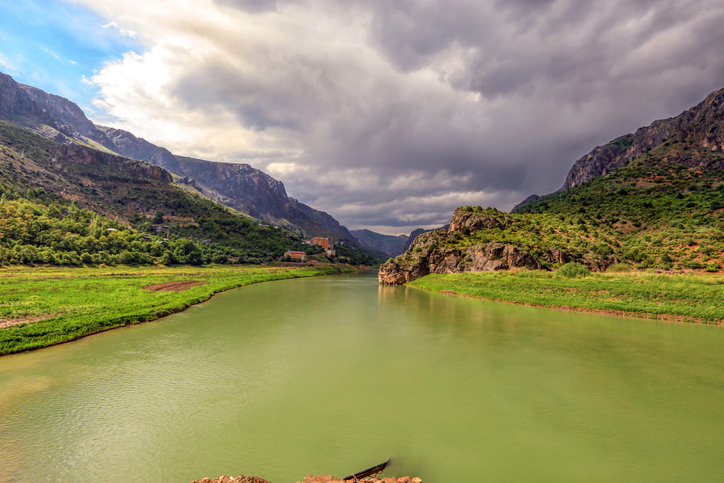
Fierce battles were fought along the mighty Euphrates River (Credit: Funtay via Getty Images)
The Basra Memorial in Iraq commemorates over 40,000 British and Commonwealth soldiers – including five recipients of the Victoria Cross – who fought and died during the Mesopotamian campaign, a theatre often overlooked in Great War histories. From late 1914 until the armistice in 1918, British forces sought to protect vital oil supplies and exert control over Ottoman Mesopotamia, engaging in fierce battles along the Tigris and Euphrates rivers. The memorial, relocated to Nasiriyah in 1997 due to regional instability, is yet another reminder that the war’s reach extended far beyond Europe, with the sacrifices of the ‘forgotten’ soldiers of the Middle East inscribed for posterity.
World War I on Discovery+
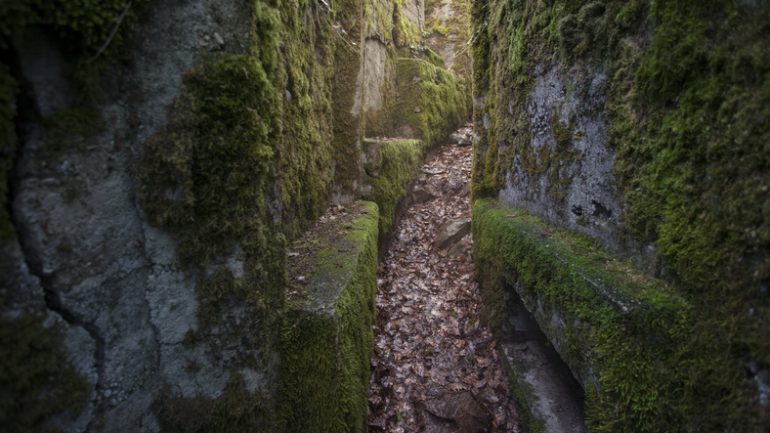
German trenches in the Alsace region of France (Credit: Antoine Rouleau via Getty Images)
Discovery+ is home to a range of fascinating documentaries on the Great War, including Tony Robinson’s World War I. The history buff and actor, who starred as Private Baldrick in Blackadder Goes Forth, tells the extraordinary story of the Great War in four unforgettable parts.
The Memories Live On
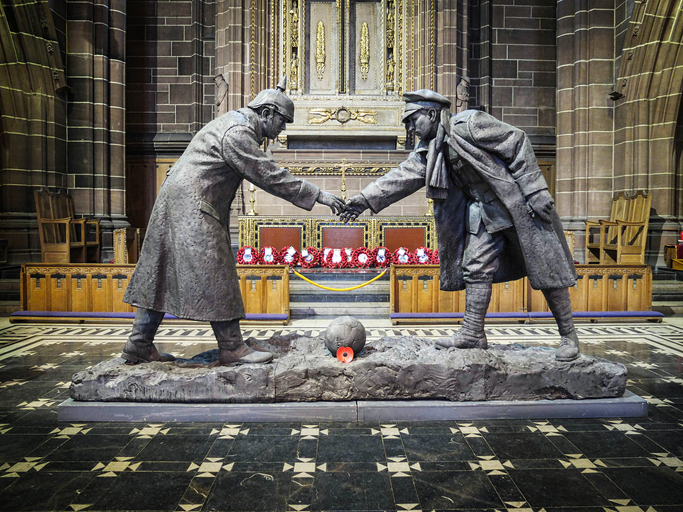
A statue of the famous WWI Christmas truce (Credit: Phil Quixley via Getty Images)
More than a hundred years on, the echoes of the Great War still resonate. From the preserved trenches and regimental memorials to village cenotaphs and vast cemeteries, each site preserves the memory of courage, sacrifice, and resilience and keeps alive a small piece of wartime history.