Phantom monks, ancient soldiers, and mournful grey ladies, Britain’s ghost stories are defined less by where they unfold, and more by who refuses to leave. Across the centuries, certain spirits have stepped out from the shadows of folklore to become fixtures in the national psyche. These aren’t just fleeting glimpses or whispered legends. They’re the spectres that linger.
So, which restless souls have stood the test of time? These are some of Britain’s most iconic ghost stories – the ones still capable of sending a chill, even on the sunniest of days. Ready to be spooked stiff? Britain’s creepiest spirits await.
The Grey Lady of Hampton Court
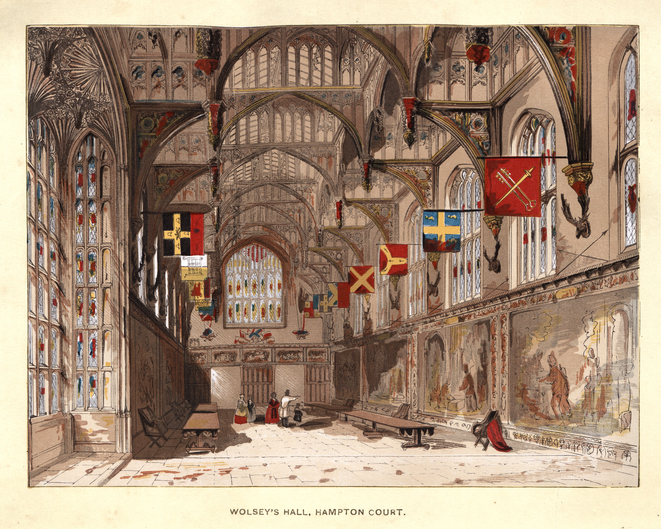
The 16th century Great Hall at Hampton Court. Was Sybil Penn here? (Credit: duncan1890 via Getty Images)
The Grey Lady of Hampton Court is said to be the ghost of Sybil Penn, a devoted servant to four Tudor monarchs, including Henry VIII and his children. After dying of smallpox in 1562, her spirit was reportedly disturbed when her tomb was moved during chapel renovations centuries later. Soon after, whispers, footsteps, and the faint hum of a spinning wheel were said to echo through the palace’s stone corridors. Staff and visitors have claimed to glimpse her grey-clad figure drifting through the Haunted Gallery, her expression mournful yet calm – as though still tending to royal duties long after death.
The Restless Spirit of Anne Boleyn
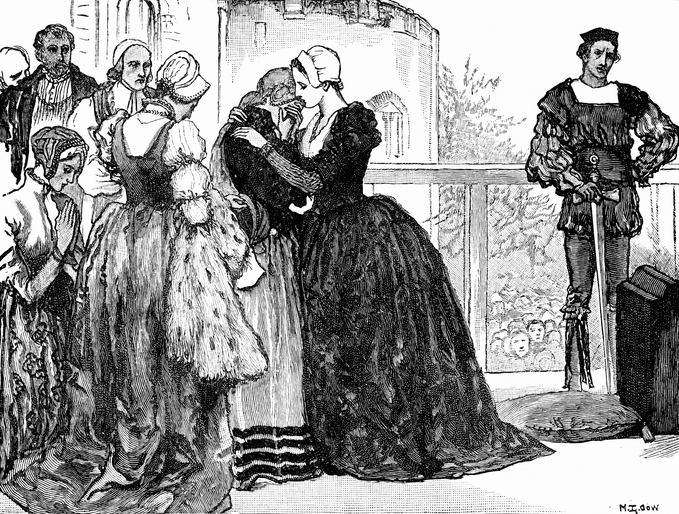
Anne Boleyn, moments before her execution (Credit: Photos.com via Getty Images)
They say Anne Boleyn still walks the Tower of London, her head tucked neatly beneath her arm. Executed in 1536, Henry VIII’s ill-fated second queen is believed to haunt the spot where she met her end. Witnesses describe her as silent and sorrowful, gliding through the corridors of the Chapel Royal or appearing near the site of her execution. Some claim she also revisits Hever Castle, her childhood home, her ghostly form forever searching for peace.
The Green Lady of Crathes Castle
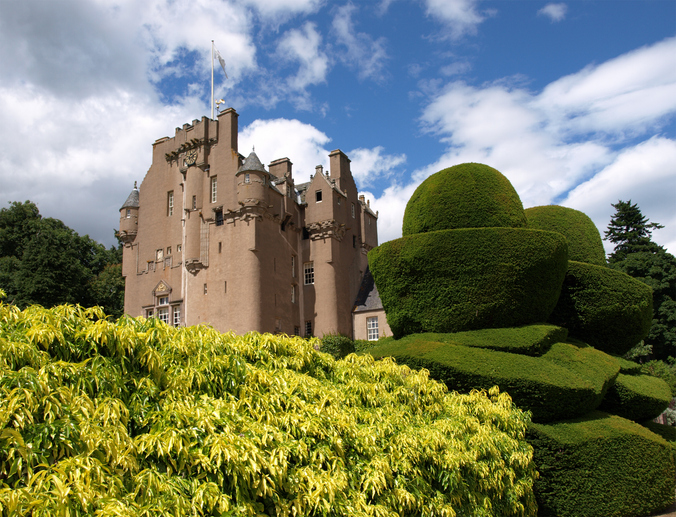
Crathes Castle in Aberdeenshire, north-eastern Scotland (Credit: Gannet77 via Getty Images)
Scotland, with its wild glens and brooding castles, hardly lacks for spectral company. Yet few tales are as tragic – or as chilling – as the Green Lady of Crathes Castle. She’s described as a luminous figure clad in a green gown, wandering the halls with a ghostly infant in her arms. When the castle was renovated in the 1800s, workers discovered the skeletal remains of a child walled up beneath the hearthstone, adding grim weight to the legend. Some visitors say the room where she appears feels suddenly colder, while others report a faint scent of lavender before her apparent apparition fades.
The Grey Man of Ben Macdui
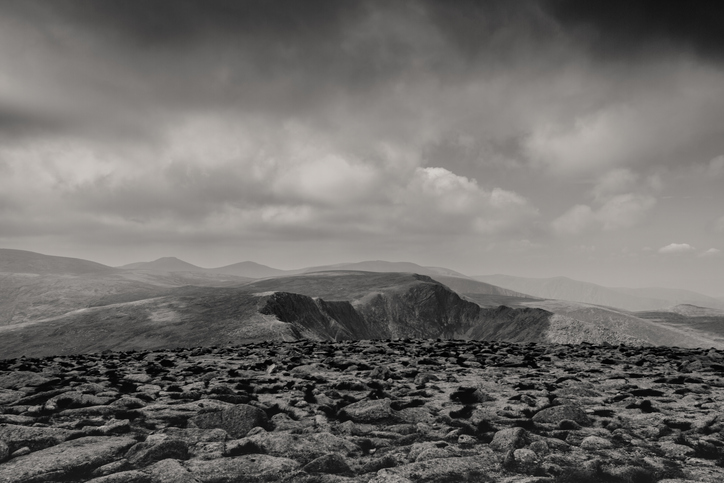
The silent, misty peaks of the Cairngorm Mountains (Credit: Coultham via Getty Images)
High in the Cairngorm Mountains of Scotland looms Ben Macdui, whose barren summit commands sweeping, silent views. Yet hikers often report an unnerving sensation there – a feeling of being followed. This presence is known as Am Fear Liath Mòr, or the Grey Man. Descriptions vary: some claim to hear heavy footsteps crunching in the snow, others glimpse a vast shadowy figure in the mist.
The Pendle Witches of Lancashire
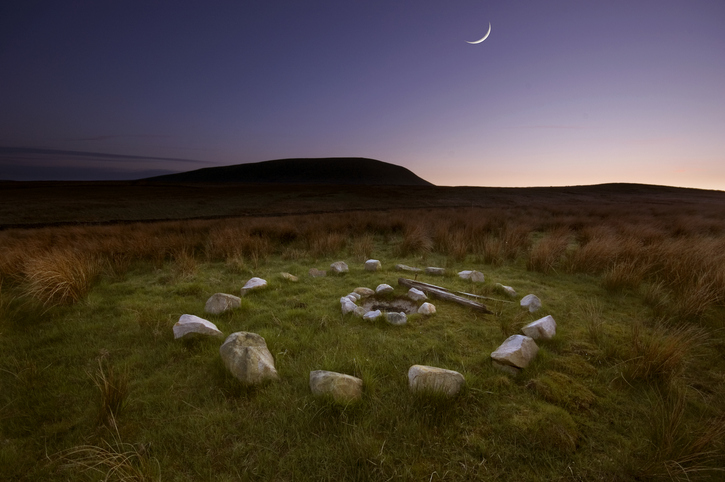
A stone circle on Pendle Hill, ancient remnants of a pagan ceremony? (Credit: Nigel Flory via Getty Images)
In the shadow of Pendle Hill, Lancashire holds one of Britain’s darkest and most enduring ghost stories. The tale dates back to 1612, when twelve people from the area were accused of witchcraft in one of the most infamous trials in English history. Ten were executed on the moors, and some believe their spirits never truly left. Witnesses speak of strange mists, disembodied whispers, and sudden chills in the air. Some claim to have seen ghostly figures moving across the hillside at dusk, perhaps the condemned souls still wandering in defiance of their fate.
The Romans of Treasurer’s House, York
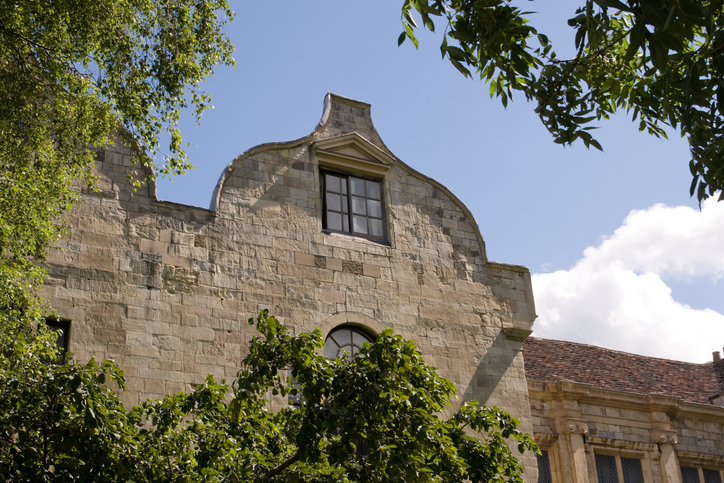
Do the ghosts of Roman centurions ride through Treasurer's House? (Credit: lleerogers via Getty Images)
The Roman soldiers of Treasurer’s House remain one of Britain’s most intriguing ghost stories. The most famous sighting occurred in 1953 by apprentice engineer Harry Martindale. Martindale recounted seeing around twenty Roman soldiers, some on horseback, marching through the cellar wall and vanishing through the other side. They appeared only from the knees up. In 1969, excavations revealed that Treasurer’s House sits directly on top of the via Decumana, one of the main roads of Eboracum, the Roman military headquarters of the north. The cellar lies almost exactly above the principia – the Roman headquarters building. The height difference is often said to support Martindale’s description of seeing them cut off below the knees.
The Monk of Borley Rectory
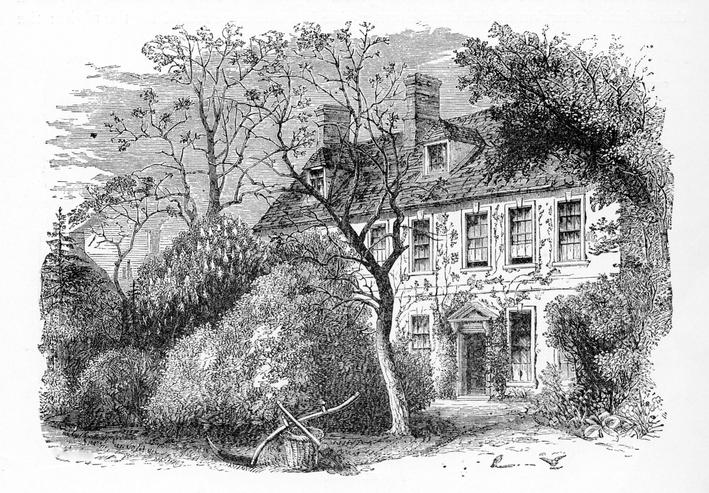
Ancient rectories are fertile breeding grounds for ghosts! (Credit: wynnter via Getty Images)
If anything’s guaranteed to spur supernatural sightings, it’s a tragic tale of star-crossed lovers. This is the background of the infamous Monk of Borley Rectory. According to legend, he was a Benedictine monk who fell in love with a nun from a nearby convent. When the pair tried to elope, they were caught – she was said to be buried alive within the convent walls, and he executed within the rectory grounds. His spirit, cloaked and silent, has been reportedly seen gliding along the so-called “Nun’s Walk” and through the ruined rectory itself. Witnesses spoke of cold drafts, phantom footsteps, and even spectral writing on walls, as though the doomed lovers still seek reunion beyond the grave.
The Ghouls of Pluckley
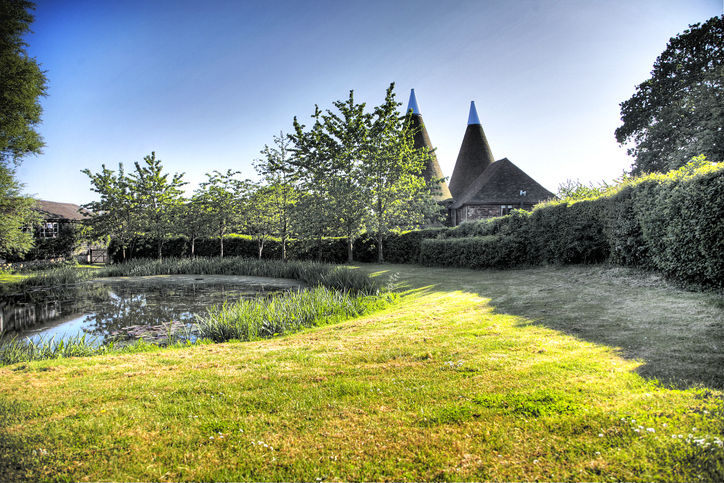
Pluckley, said to be one of England's most haunted villages (Credit: Gregory Warran via Getty Images)
The village of Pluckley in Kent is said to be haunted by around a dozen ghosts. Among them wanders the “Screaming Man,” thought to be a brickworker who perished in an accident. The village churchyard holds the “Lady of the Rose Garden,” whose spirit reportedly carries the scent of flowers through the air. Even the village inn, the Black Horse, claims ghostly patrons who rearrange bottles and whisper in empty rooms.
The Black Shuck of East Anglia
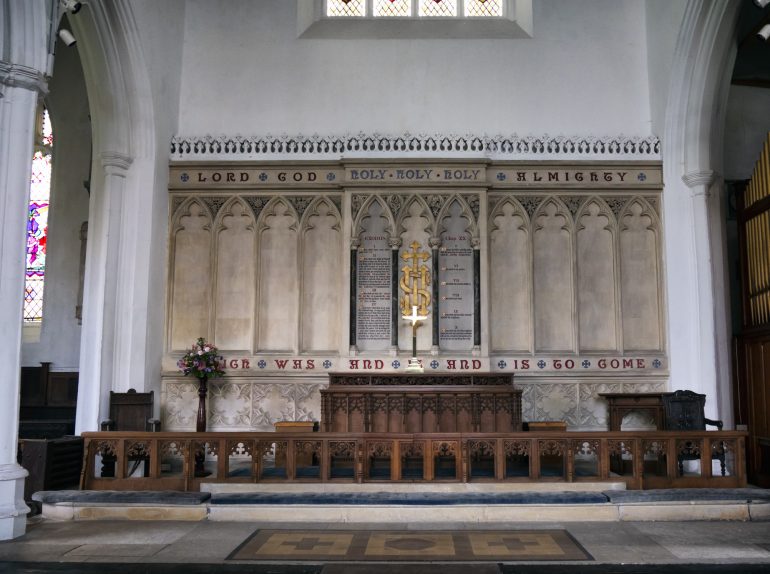
The altar in St Mary's Church in Bungay, Suffolk (Credit: whitemay via Getty Images)
Not all ghouls are of the human species. The Black Shuck is a ghostly hound said to prowl the coastline of East Anglia. Described as an enormous black dog with blazing red eyes, the Shuck has haunted the folklore of Norfolk and Suffolk for centuries. The most famous tale dates to 1577, when a monstrous black dog supposedly burst through the doors of St Mary’s Church in Bungay to a clap of thunder. The story tells how it charged up the nave, terrifying the congregation, killing a man and a boy and even causing part of the steeple to crash through the roof. The creature then raced on to Blythburgh Church, where it mauled and killed more people. When calm returned, scorch marks on Blythburgh’s wooden doors were said to be the Shuck’s claw marks – marks that can apparently still be seen today…
The Piper of Edinburgh Castle
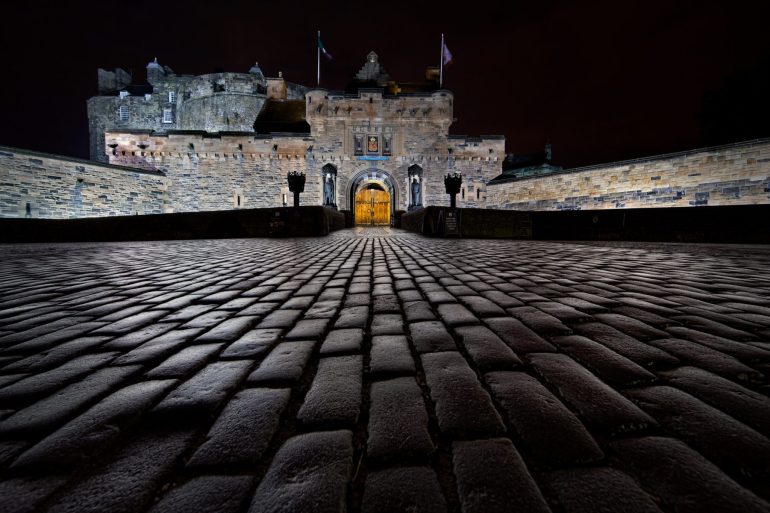
The imposing entrance to Edinburgh Castle (Credit: Billy Currie Photography via Getty Images)
The Phantom Piper is one of Edinburgh Castle’s most famous tales. It’s a legend based on another legend, namely that of secret tunnels linking the castle to Holyrood Palace. Apparently, they were discovered, but were too narrow for an adult to explore. And so, a piper boy from the Royal Piper Corps was sent down, playing his bagpipes so that people above could follow his route. Partway through, the music stopped, and the piper was never seen again. As for the tunnels, they were sealed. To this day, faint bagpipe music is said to echo from beneath the castle, particularly on quiet nights.
That’s the Spirit
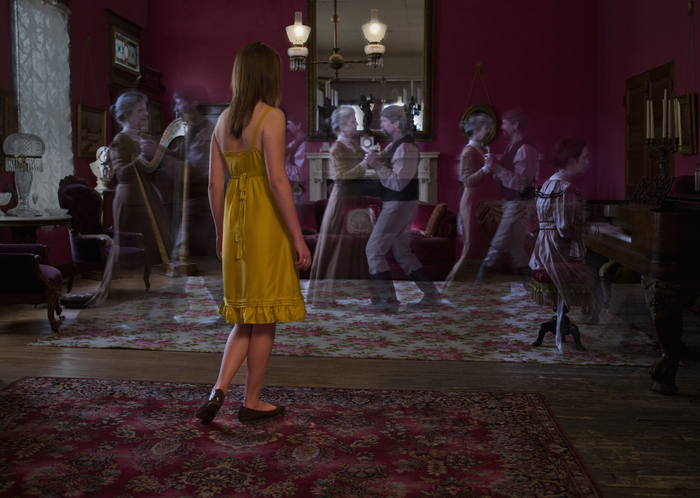
Are ghosts real...? (Credit: Ralf Nau via Getty Images)
From the heartbroken Lady of Raynham Hall to the brooding Grey Man, Britain’s ghosts have been stealing the spotlight for centuries. Are they real? Who knows. But they’re certainly not giving up their starring roles any time soon.