Few foods embody the heart of British comfort quite like the sausage. Whether sizzling in a breakfast fry-up or nestled beside a heap of mash, these plump parcels are more than just a staple — they’re steeped in centuries of tradition and taste.
From Roman roots to regional specialties, the British sausage has evolved with the times, telling a story of resourcefulness and reinvention. And we’re linking it all together.
Ancient Origins

The Romans brought lucanica from Luicania, the modern-day region of Basilicata (Credit: maudanros via Getty Images)
The earliest known practice of encasing seasoned meat within animal intestine appears as early as 3,100 BC in Mesopotamia. The technique represented a triumph of preservation – a clever means of using every part of the animal while extending its shelf life. It’s unclear when sausage-making first developed in Britain, but it likely dates back to the Roman period, beginning from their arrival in 43 AD. The invaders brought with them their own love for sausages, including the famous lucanica, a spiced pork delicacy from the region of Lucania in southern Italy.
Roman soldiers stationed on the chilly British isles often made use of cured and encased meats, such as sausages, and these rations were a welcome staple during long campaigns. These early Roman imports planted the seeds of what would later evolve into a distinctly British culinary craft. Though the precise Roman recipes vanished with the empire, the knowledge of sausage-making lingered, passed down through generations of local butchers who adapted it in their own unique ways.
Medieval Britain: From Feasts to Famine
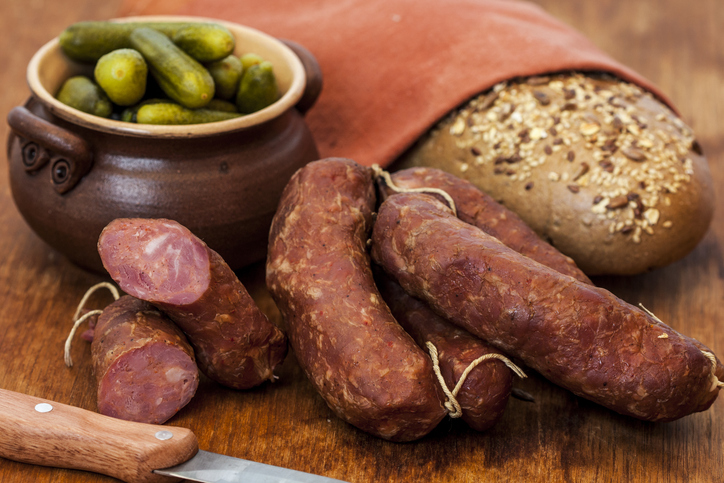
Pork sausages were popular in the Midlands (Credit: lrlucik via Getty Images)
By the medieval period, sausage-making had become a well-established practice across much of Britain. Sausages provided an efficient means to preserve valuable meat in an age before refrigeration, especially after large slaughterings in late autumn when animals were killed to avoid feeding them through winter.
The medieval sausage often bore little resemblance to the neat, uniform links of today. Instead, it took on rustic, hand-packed forms, filled with whatever ingredients were available. Pork was favoured where pigs thrived, particularly in forested areas like the Midlands, while beef and mutton appeared further north. Seasoning of sausages also reflected the growing influence of Britain’s global trade. Imported spices such as pepper and cloves enhanced the flavour, though their rarity made them a luxury. For peasants, local herbs such as sage, thyme, and marjoram offered fragrant alternatives.
Church regulations also shaped the sausage’s place in society. During periods of fasting, particularly Lent, meat consumption was forbidden, which made the eventual return of sausage-laden feasts a joyous occasion. The sausage thus carried not only practical but also reflected day-to-day life – a food tied to the calendar which formed part of the idea of a genuine feast.
The 17th and 18th Centuries: The Butcher’s Pride
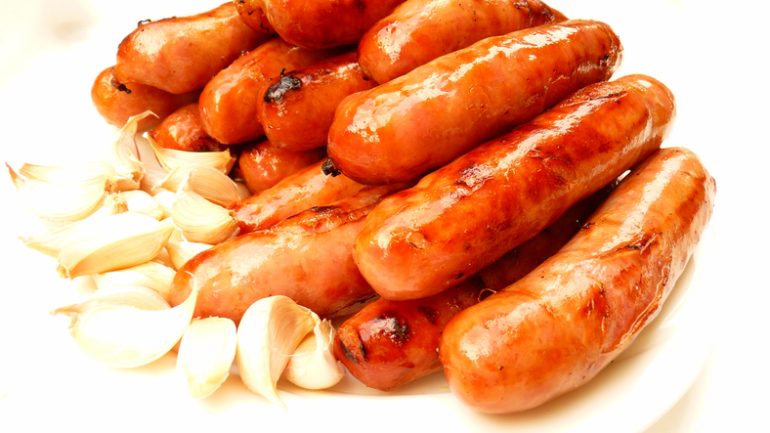
Lincolnshire sausages are one of many popular regional varieties (Credit: Wirestock via Getty Images)
As Britain entered the early modern period, sausages began to reflect growing regional specialisations. Town butchers developed signature blends which captured local tastes and traditions. London became famous for its highly seasoned varieties, while regions such as Cumberland, Lincolnshire, and Gloucester perfected their own distinctive recipes – names that still carry weight in butcher shops today.
The Victorian Sausage: A Tale of Plenty and Pragmatism
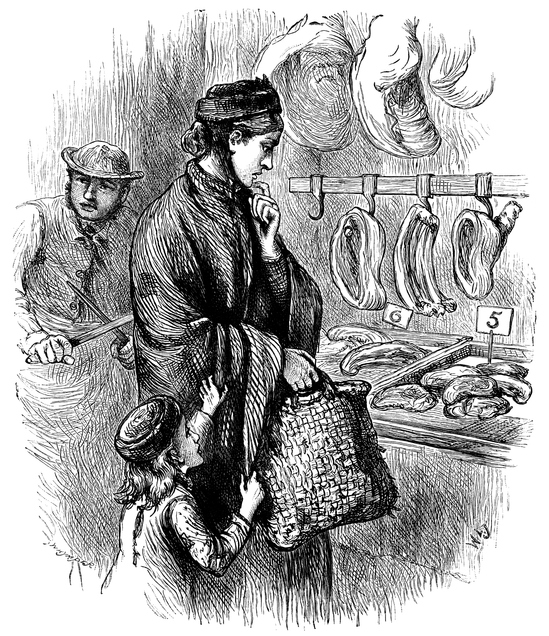
A Victorian butcher shop (Credit: whitemay via Getty Images)
The Victorian era marked a turning point for the British sausage. With rapid industrialisation came mass production and a growing working class in need of affordable meals. The sausage answered that need perfectly – inexpensive, filling, and easy to cook in cramped urban kitchens. Yet this practicality came with a darker side. Meat shortages and cost-cutting led to widespread corruption. Unscrupulous producers stretched meat with breadcrumbs, rusk, and water, or replaced it with dubious substitutes altogether.
Public concern over food quality eventually prompted legislation such as the 1860 Adulteration of Food and Drink Act – and later, the stronger 1875 Sale of Food and Drugs Act – which began to improve standards.
Regional Glory: The Rise of the Great British Sausage Map
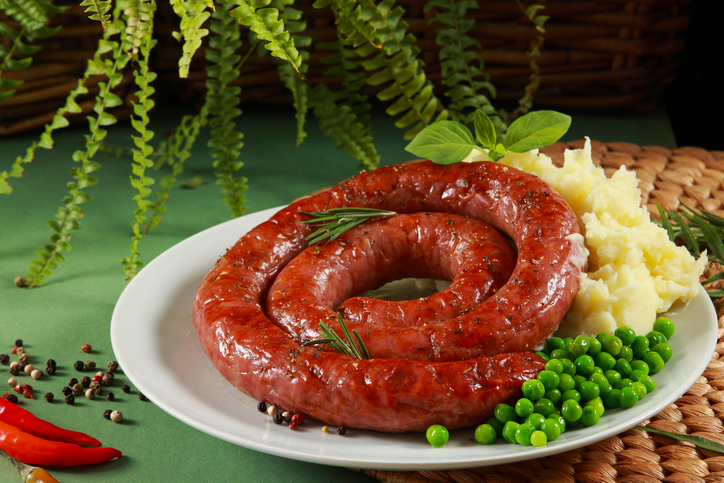
The unmistakable coil of a Cumberland sausage (Credit: SGAPhoto via Getty Images)
Among Britain’s many culinary traditions, few express regional pride quite like sausage-making. Each area developed its own distinctive recipe, reflecting local produce, preferences, and heritage.
Cumberland Sausage: Characterised by its long, coiled shape and coarse texture, this Cumbrian classic boasts a peppery blend of herbs and spices. Its origins likely lie in the county’s history as a trading hub, where imported spices met northern farming traditions.
Lincolnshire Sausage: Renowned for its generous use of sage, the Lincolnshire sausage has a coarser grind and a rustic flavour that speaks to its agricultural roots. It remains one of Britain’s most recognisable regional varieties.
Gloucester Sausage: Made traditionally from Gloucester Old Spot pork, this version emphasises quality over complexity, highlighting the natural sweetness of the meat with subtle seasoning.
Oxford Sausage: A blend of pork and veal seasoned with lemon and herbs, the Oxford sausage achieved fame in the 18th century for its refined flavour – a favorite of scholars and gentlemen alike.
20th Century to Today: From War Rations to Artisan Revival
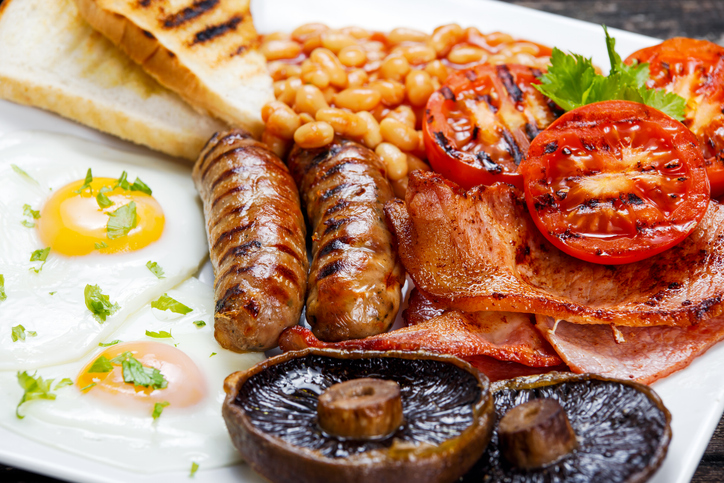
It's not a full English without sausages! (Credit: DronG via Getty Images)
The two World Wars transformed the sausage once again. During the First World War, British sausages earned the nickname “bangers” due to severe meat shortages that led producers to use watery fillers. When fried, the moisture caused the sausages to burst or “bang” in the pan – a sound that quickly entered popular vocabulary.
Postwar affluence brought new technologies and consumer expectations. Mechanisation improved consistency, while refrigeration expanded availability. By the 1960s, sausages had even become central to the archetypal “Full English Breakfast”.
With the late twentieth century came a renewed appreciation for quality and tradition. Artisan butchers revived historic recipes, emphasising local sourcing and heritage breeds. Gourmet variations introduced exotic spices, regional ales, and even vegetarian alternatives. The humble sausage found itself reinvented for the modern age.
The Sausage Today: Tradition Meets Innovation
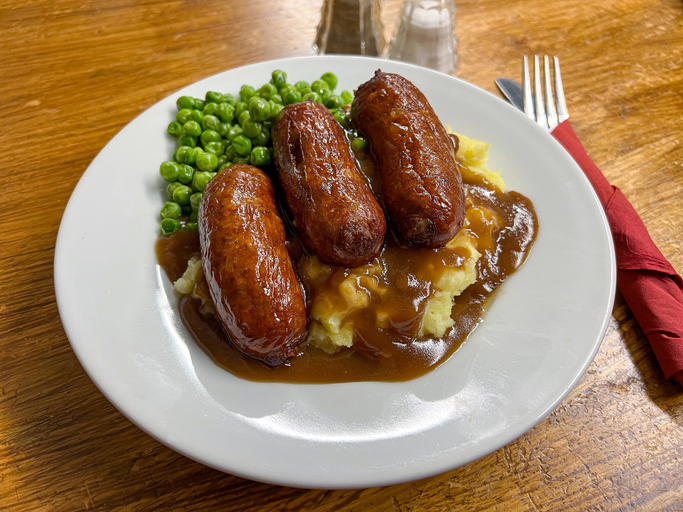
Is there a better comfort food than bangers and mash? Yum! (Credit: clubfoto via Getty Images)
In contemporary Britain, sausages occupy a unique space where nostalgia meets innovation. Annual sausage festivals celebrate the craft across the country, while television chefs elevate classic recipes with modern flair. Consumers now enjoy an astonishing variety: from traditional pork and apple to adventurous blends featuring venison, leek, or even black pudding. This epic journey from Roman soldiers to artisan producers, has seen the story of the British sausage mirror the story of Britain itself: inventive, resilient, and steeped in regional character.