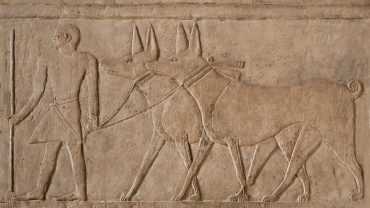
For at least 14,000 years, dogs have padded their way alongside their owners, from the freezing wilds of Eurasia, to dog parks where you can let them catch a frisbee for an hour! Descended from ancient wolves that first tamed themselves by socialising with hunter-gatherers, dogs began as partners in survival, helping early humans with hunting, protection, and as furry friends.
Worshipped, cherished, and put to work everywhere from Siberian snowfields to Mediterranean villages, today’s domestic dog is descended from now-extinct wolf lineages and wild populations across northern Eurasia. Fast-forward to 2025, and dogs truly are global citizens. Estimates suggest there are somewhere between 750 and 900 million dogs worldwide, with around 30% living as beloved pets. America boasts around 87 million pet dogs, followed by China with 53 million, and the UK with about 13 million canine companions.
Interestingly, dogs have the greatest variety in size and shape of any domestic animal, largely due to selective breeding and genetic flexibility. From tiny Chihuahuas to towering Great Danes, their diversity far exceeds that of pets such as cats, rabbits or guinea pigs.
Dogs have romped into our homes, hearts, and legends, starring in everything from epic rescues and war stories to myth, film, and pop culture. From loyal and patient companions, to cosmic pioneers, lifesavers, and superstars of the silver screen, dogs have inspired awe, friendship, and stories for generations. Whether leading sleds, starring in Hollywood blockbusters, guiding the blind, or simply wagging their tail at the door, they’ve helped shape human history for thousands of years.
What is International Dog Day?
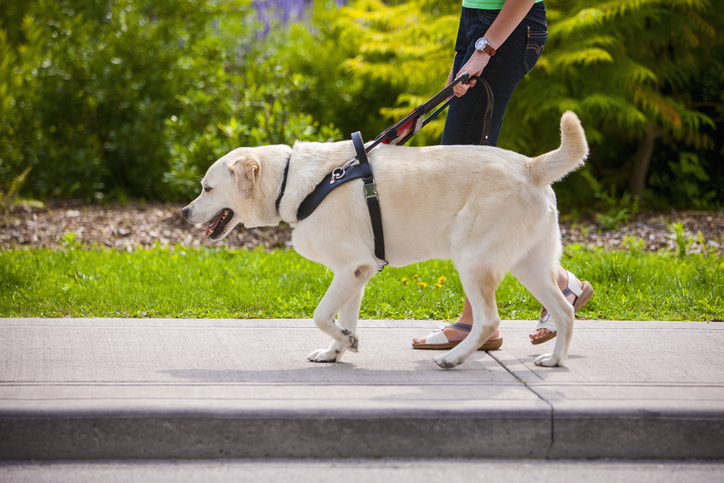
International Dog Day celebrates service dogs, working dogs and family pets (Credit: Jim Craigmyle via Getty Images)
Set up in 2004 by American pet and family lifestyle expert Colleen Paige, the original purpose of International Dog Day was threefold – to raise awareness of the number of dogs in shelters and rescues who need adoption, to celebrate dogs of all breeds and backgrounds, including service dogs, working dogs, and family pets, and to promote responsible ownership, humane treatment, and recognition of dogs’ contributions to society.
Over time, International Dog Day has grown beyond its original US roots into a global celebration. While its core message remains focused on adoption and dog welfare, it has also evolved to include advocacy around dog rights, anti-breed discrimination and animal protection laws.
Today, International Dog Day brings together dog lovers, shelters, and animal advocates worldwide in celebrating all things canine. Ready for some prodigious pups? These dogs have quite the tail to tell…
Terry
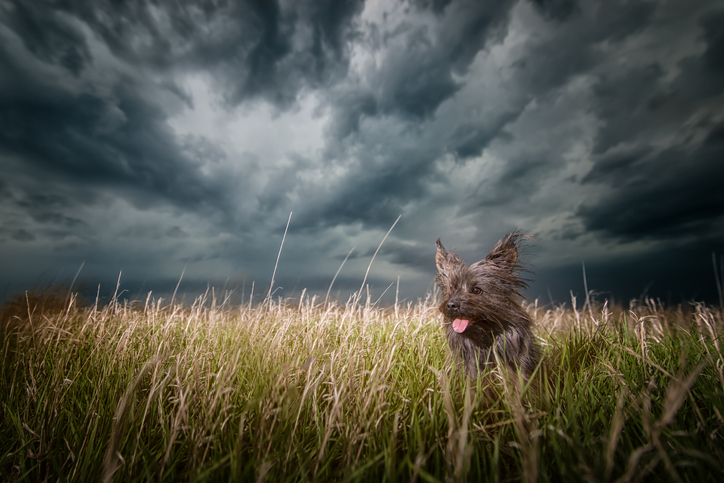
A Cairn Terrier just before the storm... (Credit: MATTHEW PALMER via Getty Images)
You may not know her as Terry, but you’ll certainly know her as Toto, the Cairn Terrier from The Wizard of Oz, one of the most beloved and recognisable dogs in cinematic history. Born in 1933, Terry was initially a shy and anxious pup, but she blossomed into a confident and talented canine actor under the training of Carl Spitz, a pioneering Hollywood dog trainer.
Tiny but feisty, Terry was perfect as Dorothy’s loyal companion. She performed all her own stunts, from escaping the wicked witch’s clutches to famously pulling back the curtain to reveal the Wizard’s true identity. Interestingly, Terry earned $125 a week – more than many of her human co-stars. Her bond with Judy Garland was so strong that the actress even offered to buy her after filming, but Terry (whose name was officially changed to Toto in 1942) remained with her trainer. She appeared in a total of twenty-three films, and while it’s hard to crown any dog as the most famous ever, Terry’s iconic role as Toto has undoubtedly cemented her as a timeless star.
Balto
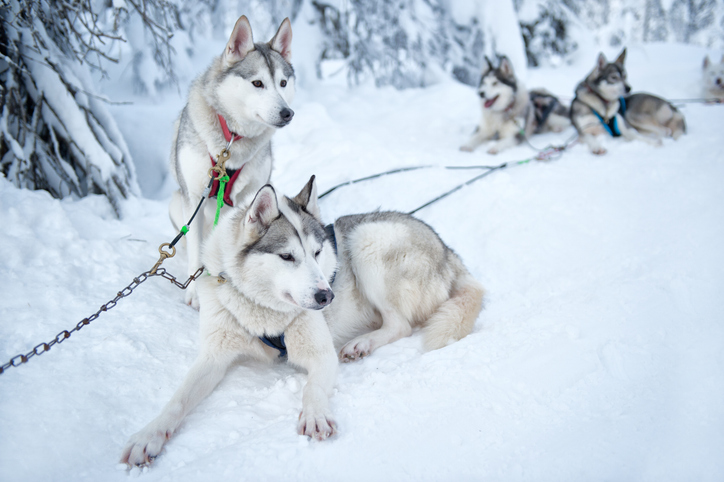
Balto was an Alaskan Husky sled dog extraordinaire (Credit: Rene du Chatenier via Getty Images)
Balto, an Alaskan husky, became one of history’s most celebrated sled dogs thanks to his role in the 1925 serum run to Nome, Alaska. When a deadly diphtheria outbreak threatened the isolated town, a relay of sled dog teams was organised to transport life-saving antitoxin across more than a thousand kilometres of brutal terrain in under six days. Balto led the final ninety kilometre leg through fierce blizzards, snowdrifts, and freezing temperatures, guiding Gunnar Kaasen and the serum safely into Nome on February 2, 1925.
While Balto took the plaudits (earning himself a statue in New York’s Central Park), his role has been somewhat overstated. Leonhard Seppala’s dog Togo ran the far longer and more dangerous stretch of well over 400 kilometres, including a treacherous crossing of Norton Sound, and is now recognised as the true canine hero of the mission. While Balto’s role was real and significant, his fame came largely from finishing the run, whereas dozens of other dogs did much of the heavy lifting.
Trakr
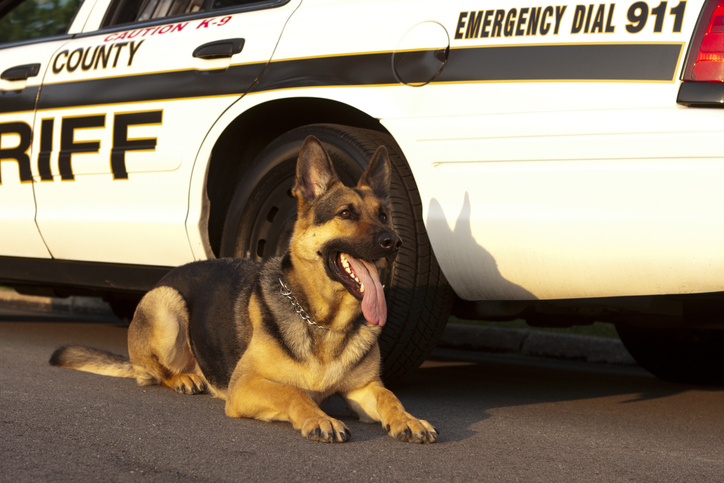
A German Shepherd police dog like Trakr, a 9/11 hero (Credit: youngvet via Getty Images)
Trakr was an astonishing German Shepherd police dog who made history with his heroic role during the 9/11 attacks. Born in the Czech Republic, he originally trained and served with the Halifax Regional Police in Nova Scotia, Canada, from the age of fourteen months, and was adept at finding missing people and uncovering contraband. Following the tragic events of 11 September 2001, Trakr and his handler, Canadian officer James Symington, travelled to New York City to assist in the search and rescue efforts at the World Trade Centre.
Trakr is credited with locating the last survivor found in the debris – a 30-year-old woman named Genelle Guzman who had been trapped for twenty-six hours under nine metres of unstable debris. Their work was tireless, searching through dangerous, smoky ruins under unimaginably difficult conditions. Trakr suffered chemical and smoke inhalation, exhaustion, and burns during the mission but survived and returned home a hero. His bravery earned him recognition as one of history’s most heroic animals by Time magazine.
Laika
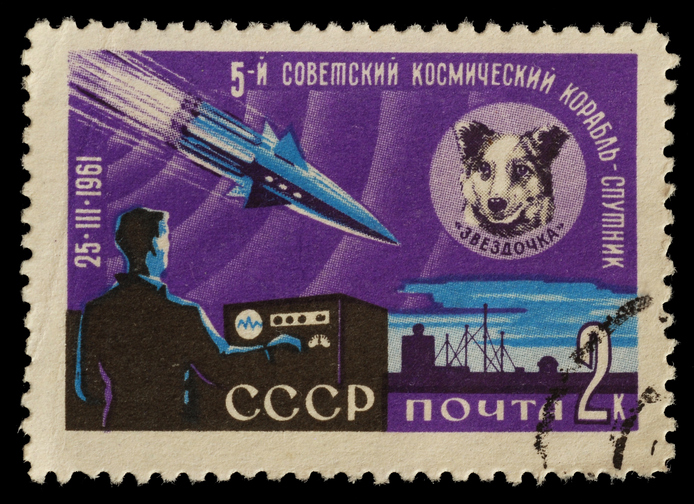
The USSR sent many dogs into space, this one in 1961 was called Zvezdochka (Credit: Leadinglights via Getty Images)
Laika was the stray pup who captured the world’s imagination as the first living creature to orbit Earth. Found roaming the streets of Moscow, Laika – meaning “barker” in Russian – was chosen for her calm nature and small size. On 3 November 1957, she was launched into low orbit aboard Sputnik 2, making history in the opening sprint of the Space Race. Soviet scientists monitored Laika’s heartbeat, respiration, and activity via wires, a TV camera and biomedical telemetry fitted to her padded, pressurised capsule, hoping to discover whether a living being could endure the brutal, unforgiving conditions of space travel.
Tragically, re-entry technology hadn’t yet been developed, and Laika’s mission was always one-way. While Soviet accounts initially claimed she survived several days, it was later revealed (in 2002) that Laika died from overheating and stress just hours after launch. Though her pioneering journey was brief, Laika – one of the world’s most famous dogs – provided invaluable scientific data and made her an enduring symbol of the race to the stars.
Hachikō
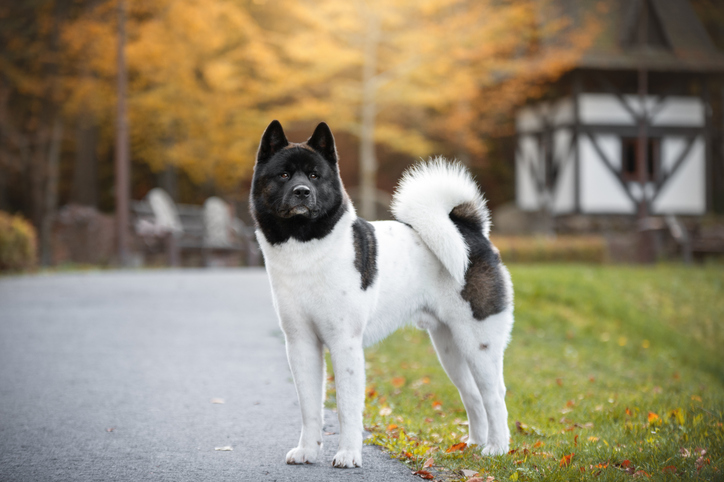
Hachi was an Akita who waiting patiently for his owner to come home (Credit: Kristina Chizmar via Getty Images)
Hachikō, an Akita born in 1923 in Japan, is celebrated worldwide as the ultimate symbol of loyalty. He belonged to Hidesaburō Ueno, an agricultural scientist at Tokyo Imperial University, who would take Hachikō to Shibuya Station every day and return to find him waiting after work. Tragically, Professor Ueno passed away suddenly in 1925, but Hachikō continued to wait at the station every day for nearly ten years, not knowing his beloved owner wasn’t coming back.
His unwavering devotion touched the hearts of commuters and quickly made Hachikō a national symbol of faithfulness. Newspapers covered his story, and people began bringing him food. Today, a statue stands outside Shibuya Station in his honour, and his story has inspired countless books and films. Hachikō’s legacy is a timeless reminder of the extraordinary bond between humans and dogs.
Donnchadh
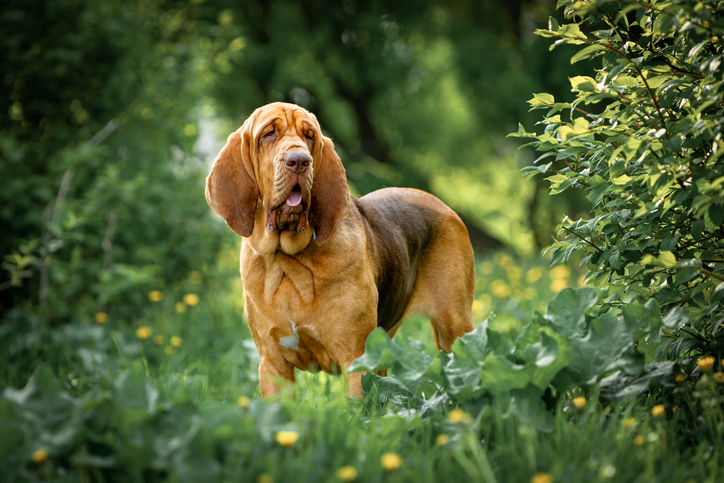
Did Robert's bloodhound change the course of history? (Credit: Evgenia Glinskaia via Getty Images)
There aren’t many dogs who can claim to have changed the course of history, but – if the story is to be believed – Donnchadh can. Donnchadh was a fiercely loyal deerhound or bloodhound belonging to Robert the Bruce, the legendary King of Scotland. The story goes that in 1306, during Scotland’s struggle for independence, the English sought to capture Robert by using Donnchadh, who had been taken hostage along with Robert’s wife. The English released the dog to track Robert’s whereabouts, confident the dog would lead them to his hiding place. However, once Donnchadh found his master, he turned fiercely on the soldiers, fighting them off and enabling Robert the Bruce to escape capture. This courageous act helped Robert survive to continue his fight for Scottish independence, eventually becoming king.
However, there aren’t any contemporary chronicles from the early fourteenth century that mention Donnchadh. Most references appear in later romantic retellings and folklore traditions, often centuries after Bruce’s lifetime. Historians generally regard Donnchadh’s tale as myth rather than fact, though it may have been inspired by real hunting dogs Bruce owned, and it persists in Scottish folklore as a symbol of loyalty and bravery.
Barry
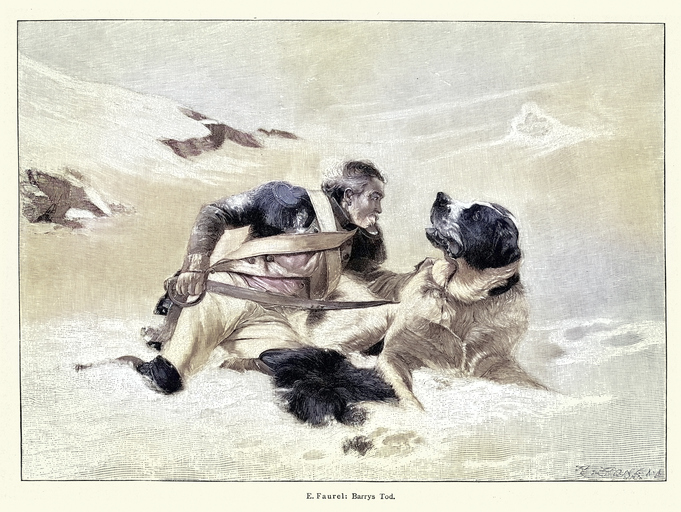
A 19th century illustration of Barry der Menschenretter (Credit: duncan1890 via Getty Images)
Originally known as an Alpine Mastiff, Barry der Menschenretter (“Barry the People Rescuer”) was later known as a St. Bernard who worked as a mountain rescue dog for the Great St. Bernard Hospice in the Swiss Alps during the early 1800s. Barry was born in 1800 and was smaller and lighter than modern St. Bernards, but he was celebrated for his remarkable bravery and intelligence. Over a twelve-year career, Barry is credited with saving more than forty lives, searching through dangerous snowdrifts and avalanche debris to find lost or injured travellers.
His most famous rescue involved discovering a young boy trapped in an ice cavern. Barry reportedly warmed the boy by licking him and then carried him on his back to safety at the hospice. While some stories of Barry’s heroic deeds may have been embellished, he remains a national symbol of courage and loyalty in Switzerland. After retiring, Barry lived out his days in Bern. His legacy endures with a monument in Paris and the tradition of naming rescue dogs “Barry” in his honour.
Famous Make-Believe Dogs
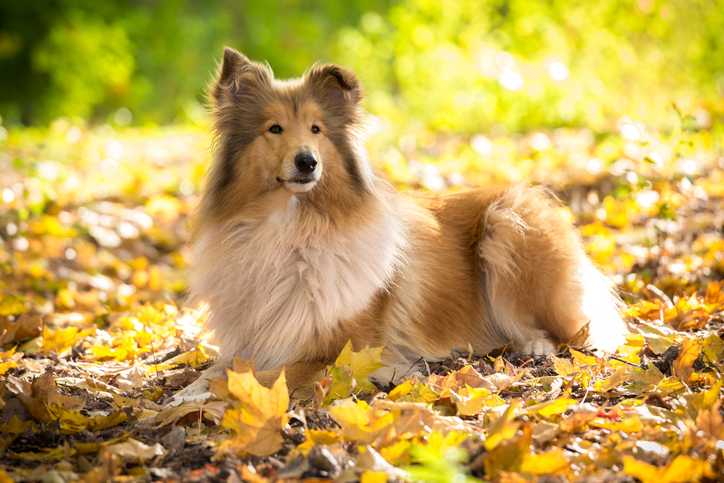
The 'Lassie Dog' a stunning Rough Collie (Credit: 3sbworld via Getty Images)
From ancient epics to modern cartoons, dogs have been beloved companions and heroes in stories that have captured imaginations for centuries. These fictional dogs – each with their own unique charm and personality – have left paw prints on literature, film, and culture around the world.
Snoopy
Snoopy, the imaginative beagle from Charles M. Schulz’s Peanuts comic strip, debuted just two days after the strip’s launch in 1950. Originally a silent companion, Snoopy evolved into a multi-faceted character with a rich fantasy life. Snoopy’s playful spirit and philosophical musings helped him become one of the twentieth century’s most iconic and beloved cartoon dogs. Remarkably, Snoopy even has his own star on the Hollywood Walk of Fame!
Scooby-Doo
The lovable and snack-obsessed Great Dane is the star of the enduring Scooby-Doo franchise, first appearing in 1969. Known for a heady mixture of endearing cowardice and surprising bravery, Scooby teams up with Fred, Velma, Daphne and Shaggy to solve spooky mysteries while sharing countless adventures. Scooby’s distinctive laugh has become a cultural staple, influencing generations of animated storytelling.
Lassie
Lassie, the Rough Collie made famous by Eric Knight’s 1940 novel Lassie Come-Home, is a symbol of loyalty and courage. Throughout numerous films, TV shows, and books, Lassie embarks on daring rescues and adventures, always returning to her beloved family. Lassie’s influence helped popularise the collie breed and set a standard for heroic dog characters on screen.
Gromit
Wallace’s silent yet expressive anthropomorphic dog from Nick Park’s Oscar-winning Wallace & Gromit stop-motion animations, Gromit is a devoted companion with a knack for mechanical invention and problem-solving. Unlike many canine characters, Gromit never speaks but communicates brilliantly through facial expressions and gestures. His sharp intelligence and loyalty have made him a British pop culture icon and an audience favourite.
Argos
No, not the high street store, but the dog from Homer’s Odyssey, one of literature’s earliest and most poignant examples of canine loyalty. Likely written in the eighth or seventh century BC, the story, divided into twenty-four books, tells the tale of Odysseus’s journey home from the Trojan War. After two decades of Odysseus’s absence, Argos is old and neglected, yet he instantly recognises his master’s voice when he returns to Ithaca and is a symbol of the literary themes of faithfulness and homecoming.