On Christmas Eve, as twinkling lights cast a gentle glow and the hush of the night sets in, a curious tradition takes centre stage. Stockings – knitted, quilted, or festooned with pom-poms – are hung with care by fireplaces, banisters or bedposts, each full of festive promise. It’s a scene repeated in homes across the globe. But where did it come from? Why stockings? Why hanging? And how did it become such a beloved part of Christmas?
The stocking story stretches from saints to socks, winding through folklore, faith, and a dash of good fortune. Let’s unravel the history of the Christmas stocking, and discover how a simple act of generosity became a holiday mainstay.
A Humble Beginning at the Hearth

It used to be all about the warmth (Credit: baza178 via Getty Images)
Long before stockings were novelty items emblazoned with reindeer or stitched with children’s names, they were simply everyday garments. In colder climates, stockings were essential, often hand-knitted from wool and worn daily. And, at night, they were typically hung by the fire to dry – a practical solution in homes where damp and cold were constant companions.
The fireplace, meanwhile, was the heart of the home. It provided warmth, a place to cook, and light after sunset. It was also where families gathered to share stories, pass on traditions, and mark the turning of the year. When Christmas arrived, it was the focal point of the festivities. It was here that yule logs were burned, prayers were said, and, eventually, stockings were left hanging overnight.
What transformed this practical habit into a festive tradition was a story that’s endured through the centuries.
The Legend that Started It All

A painting of Saint Nicholas (Credit: Huntstock via Getty Images)
The most commonly told origin story of stockings centres on St Nicholas, thought to be the real-life inspiration behind Father Christmas. According to legend, St Nicholas learned of a poor man who couldn’t afford dowries for his three daughters. Without dowries, the daughters would be unable to marry.
Wanting to help without embarrassing the family, Nicholas supposedly crept to their house under cover of darkness and tossed bags of gold down the chimney. The gold landed in stockings (or sometimes said to be shoes) that had been left by the fire to dry. When the daughters awoke, they discovered their unexpected fortune, and their lives were changed forever.
Whether fact or folklore, the story spread rapidly across Europe. The idea that good fortune could arrive by accident, dropped in when least expected, soon blossomed into the tradition of stockings at Christmas.
How the Tradition Spread

St. Nicholas Day, or Sinterklaas, a prelude to the stocking tradition (Credit: Anikaart via Getty Images)
The stocking tradition grew gradually across Europe, particularly in countries where St Nicholas was already celebrated. Children in places like the Netherlands, Germany, and parts of France would leave shoes out overnight on St Nicholas’ feast day, hoping for small gifts, coins, or treats.
Over time, aspects of the story changed. For instance, bags of gold became gold balls or oranges, which is why citrus fruit or chocolate coins are frequent fillers. When Christmas celebrations expanded, these shoe traditions also changed. Shoes became stockings. Feast days merged with Christmas Eve. And St Nicholas slowly transformed into the red-suited figure we recognise today.
By the 18th and 19th centuries, hanging stockings by the fireplace had become a well-established Christmas ritual in Britain and America. Popular culture soon helped to cement it further. Like Clement Clarke Moore’s 1823 poem A Visit from St Nicholas (better known as ’Twas the Night Before Christmas), which includes the famous line:
“The stockings were hung by the chimney with care,
In hopes that St Nicholas soon would be there.”
With those lines, the stocking became inseparable from Christmas itself.
A Victorian Love of Tradition
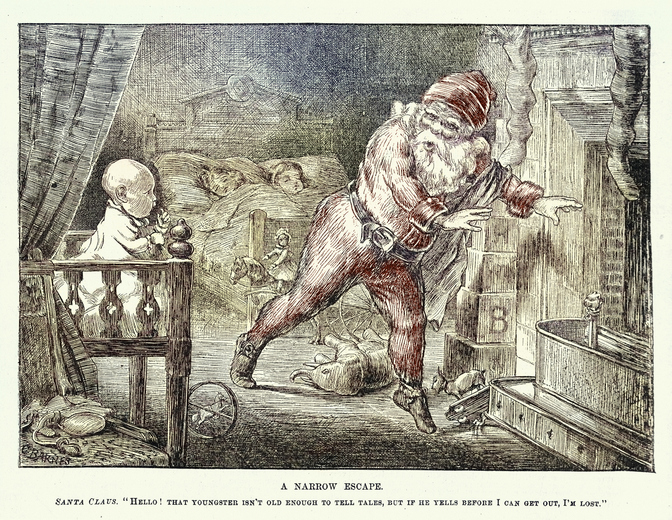
A Victorian Christmas cartoon (Credit: duncan1890 via Getty Images)
The Victorian era played a crucial role in cementing the Christmas stocking as a household staple. This was a time when many modern Christmas customs took shape, fuelled by nostalgia, domesticity, and a renewed focus on family life.
Victorian households embraced Christmas trees, cards, crackers, and stockings. The stockings themselves were often handmade, personalised, and reused year after year. Importantly, Victorian stockings were not stuffed with lavish gifts. Instead, they held small, symbolic items: fruit, nuts, sweets, coins, and simple toys. An orange nestled in the toe became a particular favourite, representing a rare treat in the winter months.
At the same time, the Victorians popularised the idea of Christmas as a moral occasion, a time for generosity, charity, and goodwill. The stocking, born from a tradition of anonymous kindness, fitted perfectly into this festive narrative.
Luck, Lore, and a Little Lesson
No-one wants a lump of coal! (Credit: Aleksandr Zubkov via Getty Images)
Traditionally, well-behaved children received treats in their Christmas stocking, while those who misbehaved might find a lump of coal waiting instead. This light-hearted warning turned the stocking into both a reward and a gentle reminder.
The idea of luck remained central. Just as the gold coins had fallen by chance into the stockings of Saint Nicholas’s legend, modern stockings became places where surprises appeared overnight, unseen and unexplained. Children were encouraged to believe that anything might be waiting inside.
A Tradition That Travels
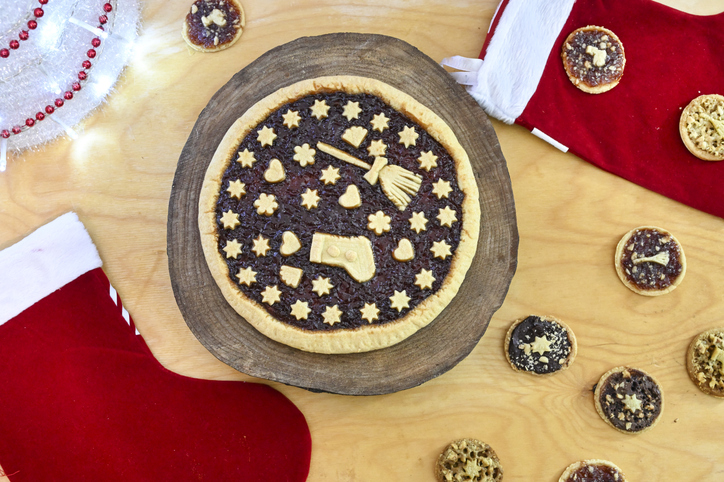
A traditional Italian pastry tart celebrating la Befana (Credit: Paolo Gagliardi via Getty Images)
While the stocking is most closely associated with British and American Christmas tradition, similar customs exist elsewhere. In some European countries, children still leave shoes rather than stockings. In parts of Italy, gifts arrive via La Befana, who fills stockings on Epiphany. In Spain, presents traditionally appear on Three Kings’ Day, though stockings are becoming more common.
A Toe-tally Timeless Tradition
Merry Christmas! (Credit: Catherine McQueen via Getty Images)
So why do we keep hanging Christmas stockings? As well as pure tradition there’s the sense of fun, excitement and anticipation it brings, the thrill of waking to a festive surprise. In homes all across the globe the delight of finding a jam-packed stocking on Christmas morning is one festive tradition that’s genuinely hard to beat.