Christmas might be recognised around the globe, but uniformity has never been part of its charm. While evergreen trees, gift exchanges and lavish meals dominate many celebrations, other corners of the world take a very different approach to festive cheer.
From vegetables hidden among branches to towering goats woven from straw, these unique customs reveal just how inventive the season can be. Ready to jingle all the way around the world? Let’s go.
A Pickle in the Pine: Germany and the United States
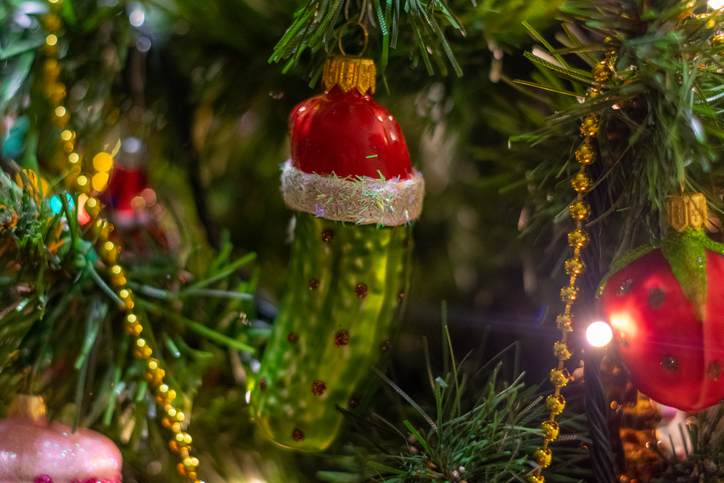
The Christmas Pickle! (Credit: Lukasz Jasionowski via Getty Images)
Hanging baubles, chocolates and tinsel on the tree is well known the world over, but what about pickles. Pickles? Yes, pickles. While traditionally associated with Germany, the ‘Christmas pickle’ is now more widely embraced in the US, this tradition involves hiding a glass pickle ornament among the branches of the Christmas tree. On Christmas morning children search for the pickle, the first to find it gets an extra gift.
Despite its supposed German origins, many Germans are unfamiliar with the tradition, leading historians to believe it may have been popularised by German immigrants in America during the 19th century. Some stories claim it originated as a folk tale, others as a marketing invention by ornament manufacturers.
The Yule Cat: Iceland’s Festive Feline of Fear
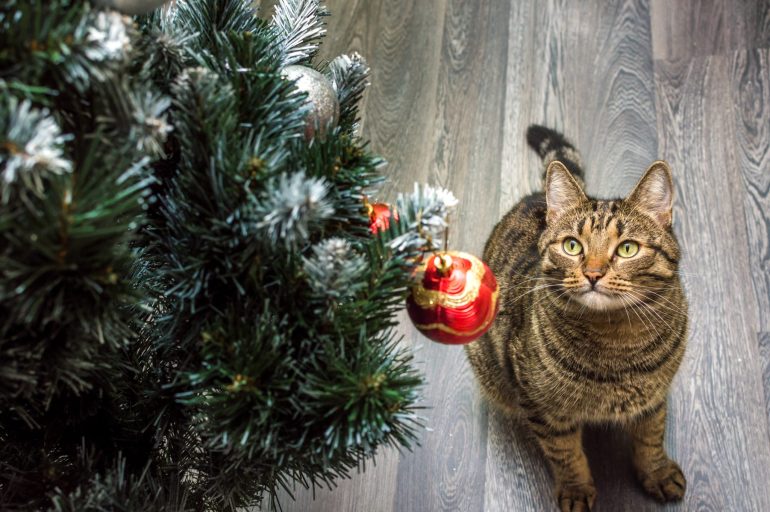
A Christmas cat! (Credit: anastas_ via Getty Images)
In Iceland, Christmas folklore carries a sharp warning. The Yule Cat, or Jólakötturinn, is a gigantic, terrifying feline said to roam the snowy countryside during the festive season. According to legend, the cat devours anyone who does not receive new clothes for Christmas.
This fearsome creature is thought to originate from Iceland’s farming past, where workers were rewarded with new garments if they completed autumn wool-processing tasks before winter. Those who failed to do so risked becoming prey for the Yule Cat. Today, the story lives on in children’s tales and poems, and gifting clothes at Christmas has become a light-hearted nod to this darker folklore.
Roller-Skating to Church: Venezuela
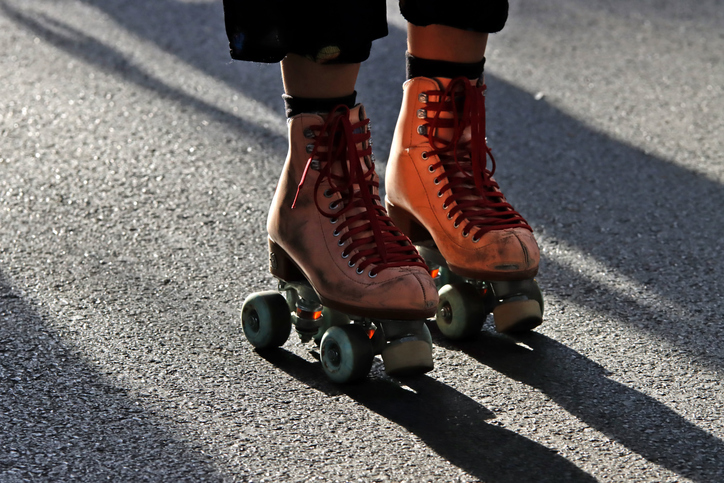
There's only one way to get to church in Caracas! (Credit: Rapeepong Puttakumwong via Getty Images)
In Caracas, Christmas takes a decidedly wheeled turn. In the run up to the big day, this tradition sees people taking an early morning skate to church. In some years, streets have even been closed to traffic due to the sheer number of participants. While the exact origins remain unclear (it seems to have emerged around the 1950s), the custom has become a well-loved part of local Christmas fun.
The Scandinavian Yule Goat: An Ancient Symbol
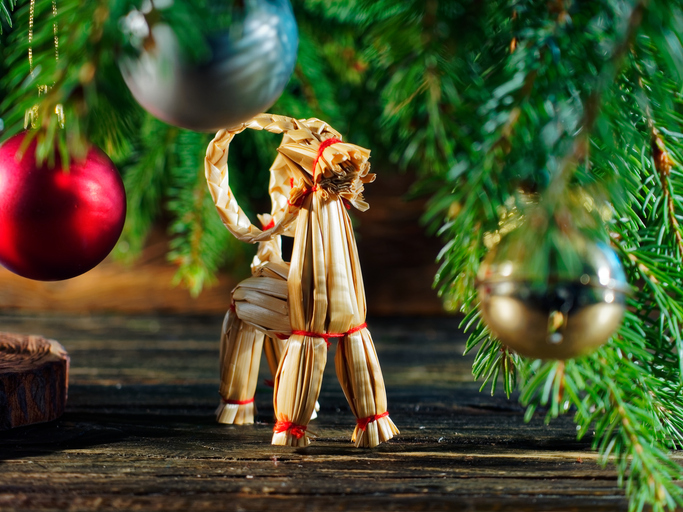
A traditional straw Yule Goat (Credit: invizbk via Getty Images)
Long before sleigh bells rang or stockings were hung, a far older figure roamed the Nordic winter landscape: the Yule Goat. With origins in pre-Christian Norse and Germanic lore, this curious creature is believed to have deep ties to ancient harvest rites and the thunder god Thor, whose celestial chariot was drawn by two formidable goats.
From symbolic ties to the “spirit of the harvest” to festive appearances in Xmas processions, the Yule Goat has shape-shifted through centuries of Scandinavian tradition. Today, its most enduring form may be found woven in straw and tucked beneath Christmas trees, or towering above city squares, like the colossal Gävle Goat in Sweden, whose annual debut has captured imaginations, not to mention headlines, since 1966.
Shoes Filled with Treats: The Netherlands

A traditional Sinterklaas offering (Credit: Rimma_Bondarenko via Getty Images)
In the Netherlands, Christmas cheer arrives early with Sinterklaas, celebrated on 5 December. In the weeks leading up to the holiday, children place their shoes by the fireplace or door, often with a carrot or hay inside as a treat for Sinterklaas’s horse. Overnight, the offerings are exchanged for sweets or small gifts. Songs are sung to encourage Sinterklaas’s generosity, and excitement builds long before Christmas Day itself.
Spiders and Silver Threads: Ukraine
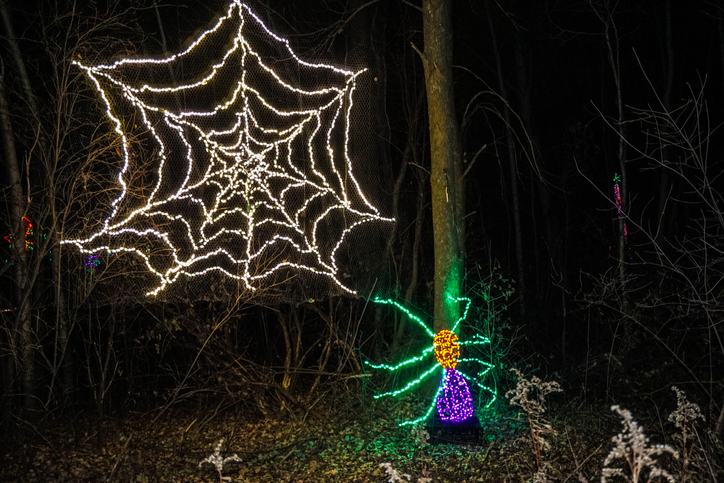
An incey wincey Christmas spider! (Credit: Sandra Lund via Getty Images)
At first glance, spiders seem an unusual choice for Christmas décor, yet in Ukraine they hold a place of honour. Trees are often dressed with fine, silvery webs and tiny spider ornaments, a nod to an old folk tale. The story tells of a widow too poor to afford decorations, whose children woke on Christmas morning to find spiders had spun webs across their tree. Bathed in sunlight, those webs shone like silver. As a result, spiders became symbols of good fortune. There’s even a theory this legend inspired the use of tinsel, though that may just be a web of lies…
Fried Chicken Feast: Japan
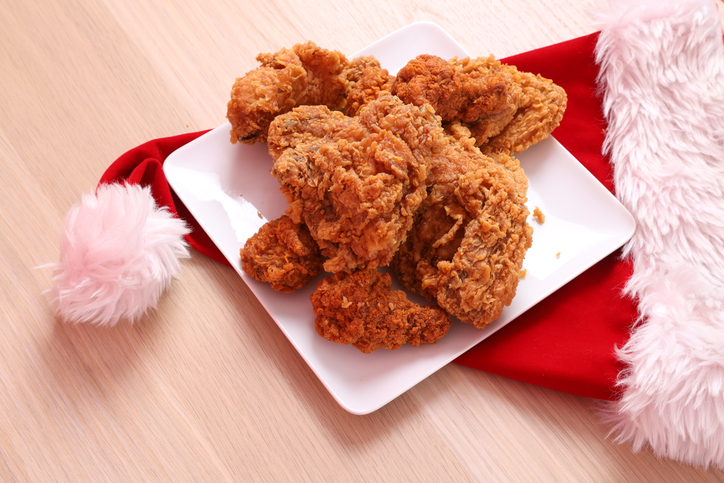
KFChristmas! (Credit: Supaluk Wiangsukphaiboon via Getty Images)
In many parts of the world, Christmas dinner conjures images of roast turkey, glazed ham, or festive puddings. In Japan, however, the holiday table looks very different. Despite Christmas being neither a public holiday nor a traditionally religious occasion, one food has become synonymous with the season: fried chicken.
This unlikely custom can be traced back to a clever 1970s marketing campaign by Kentucky Fried Chicken. With the slogan “Kentucky for Christmas,” the brand tapped into curiosity about Western traditions and created one of the most lasting festive rituals in modern Japan. Today, families place orders weeks in advance, queues snake around restaurants, and buckets of fried chicken have become an unexpected symbol of Christmas celebration.
A Witch on a Broomstick: Italy’s La Befana
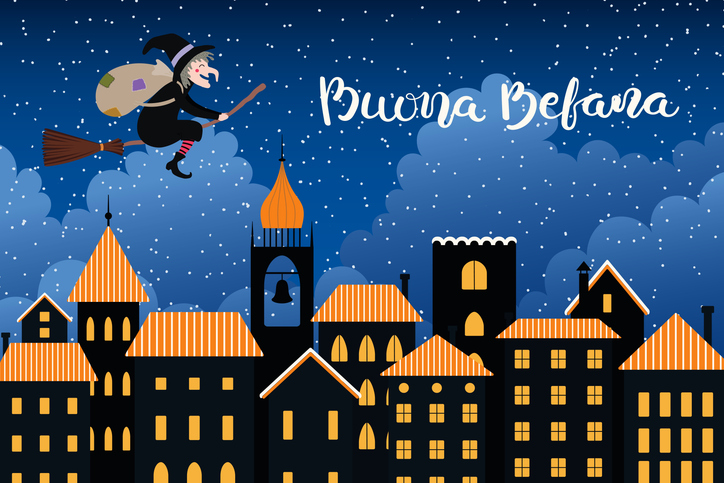
Buona Befana! (Credit: sceptical cactus via Getty Images)
In Italy, Christmas celebrations stretch beyond December into early January, culminating with La Befana on the night of 5 January. According to legend, La Befana is a kindly old witch who travels by broomstick, delivering gifts to well-behaved children and coal to those who’ve misbehaved. Markets fill with Befana figurines, sweets, and decorations, and the witch has become a cherished, if unconventional, festive figure.
Shoe Throwing: Cheer in the Czech Republic

Marriage may be close... (Credit: Elena Pejchinova via Getty Images)
Christmas in the Czech Republic is rich with small superstitions, many of which are said to offer glimpses into the year ahead. Slicing open an apple to read the shape of its seeds to hint at future health, while floating a candle in half a walnut shell suggests how much travelling the next year may bring.
Following this thread of seasonal fortune-telling, shoe throwing turns its attention to love. On Christmas Eve, unmarried women stand with their backs to the front door and toss a shoe over their shoulder. If the toe points towards the door, marriage is thought to be close; if the heel faces it, another year of single life awaits.
That’s a Wrap
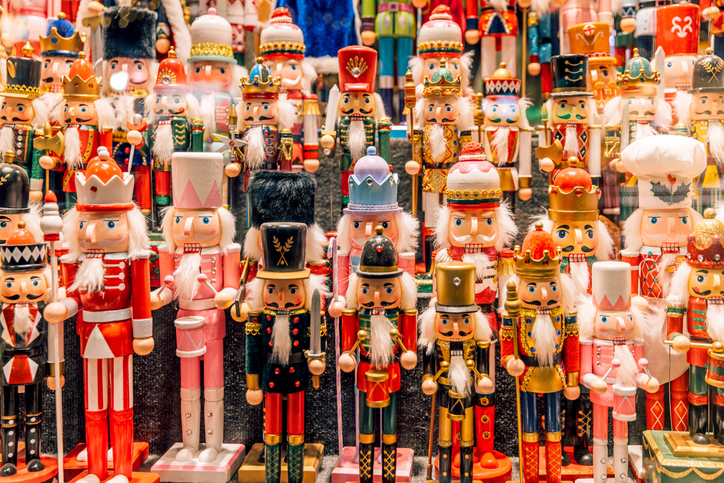
Merry Christmas everyone! (Credit: Alexander Spatari via Getty Images)
From fearsome cats and mischievous goats to pickles hidden in pine trees, Christmas customs vary greatly across the globe. But however the season is celebrated, the sense of fun and festive cheer remains pretty universal.